
Where the Spirit Wills
The freedom of God and the surrender of the heart

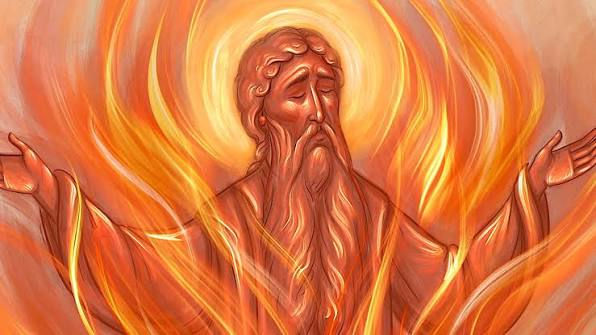
“The wind blows where it wills, and you hear the sound of it, but you do not know whence it comes or whither it goes; so it is with every one who is born of the Spirit.”
— John 3:8
We would like God to be predictable.
We would like the spiritual life to unfold according to recognizable lines: obedience followed by clarity, fidelity followed by stability, sacrifice followed by some visible confirmation that we have understood correctly.
But the Spirit does not promise this.
He blows where He wills.
The Fathers understood something about this freedom of God. They went into the desert not because they had discovered a place where God could be controlled, but because they had finally abandoned the attempt to control Him. They left behind many of the structures by which a person ordinarily knows who he is. Reputation. Position. Expectation. The judgment of others. Even their own ideas about holiness.
The desert stripped them of the need to know where the wind was going.
This is harder than it sounds.
We can become attached even to sacred things. We can cling to a particular understanding of our vocation, our usefulness, our place in the Church, our service to others, or the shape we imagined our fidelity would take. And because these things are good, we may not recognize our attachment to them.
Then the wind begins to blow.
Something that seemed permanent begins to loosen.
A door closes.
A familiar language no longer says everything it once said.
The life we carefully constructed becomes strangely uninhabitable.
We pray for clarity and receive silence.
We ask God where He is taking us, and He answers only by asking us to take another step.
There is a temptation at such moments to think something has gone wrong.
Perhaps nothing has gone wrong.
Perhaps the wind is blowing.
The modern elders speak repeatedly of allowing ourselves to be led by Providence without demanding that Providence explain itself. This is not passivity. Nor is it permission to follow every desire and call it the Holy Spirit. The Fathers were ruthless about discernment. They distrusted impulse, self-will, spiritual excitement, and every convenient revelation that confirmed what a person already wanted.
But they were equally suspicious of another temptation: trying to imprison God within our expectations.
The Spirit is free.
And therefore the person who desires God must gradually become free as well.
Sometimes that freedom comes through losing the future we imagined.
There are seasons when faithfulness means remaining exactly where we have been placed. There are others when faithfulness requires allowing something beloved to fall from our hands. The difficulty is that from within the experience these may look almost identical. Both require patience. Both require humility. Both require the willingness to be misunderstood.
Discernment therefore becomes very simple, though never easy:
Do not ask first, Where will this lead me?
Ask, Where is Christ?
Do not ask, What will become of me?
Ask, What is being asked of me now?
Do not demand that the whole road be revealed.
Attend to the next obedience.
The Spirit may lead a person into a place he never imagined entering. He may dismantle identities that once seemed inseparable from faithfulness. He may allow us to become small after years of being visible, silent after years of speaking, hidden after years of usefulness.
And perhaps there comes a moment when we understand that this too is mercy.
God is not merely leading us somewhere else.
He is freeing us from the need to know where somewhere else is.
This is the poverty of the desert.
The old map remains in our hands, but the landmarks have disappeared. We cannot return to what was, and we cannot yet see what will be.
There is only God.
And perhaps this is why the Spirit sometimes permits the road to become obscure. We had begun to trust the road.
He wants us to trust Him.
So we need not chase the wind.
We need not explain it.
We need not persuade others that it is blowing.
We need only become still enough to recognize its movement and humble enough to test what we hear. And when, after prayer, patience, counsel, suffering, and long waiting, the same quiet summons remains, we may discover that obedience no longer means preserving the life we knew.
It means consenting to be led.
The wind blows where He wills.
We hear its sound.
We do not know where it comes from or where it goes.
And eventually the heart learns a prayer simpler than certainty:
Spirit of God, I do not need to know where You are taking me.
Only do not let me resist You.


Comments