
When the Greatest Becomes Small
John the Baptist and the terrible freedom of decreasing

“He must increase, but I must decrease.”
— John 3:30
There is something almost unbearable about where we find John the Baptist in this Gospel.
The man of the wilderness is no longer in the wilderness.
The voice that once cried out beside the Jordan is confined behind walls. The crowds are elsewhere now. Another is preaching. Another is healing. Another is gathering disciples. John cannot even go to Jesus himself. He must send others with his question:
“Are you he who is to come, or shall we look for another?”
This is the man whom Jesus will call the greatest among those born of women.
And this is what his greatness looks like.
Not triumph.
Not certainty untouched by darkness.
Not influence.
Not usefulness.
A prison.
A question.
And soon, a death almost hidden from the world.
We misunderstand holiness because we imagine that the saints become increasingly impressive as they approach God. The Gospel tells us something much more frightening.
They become small.
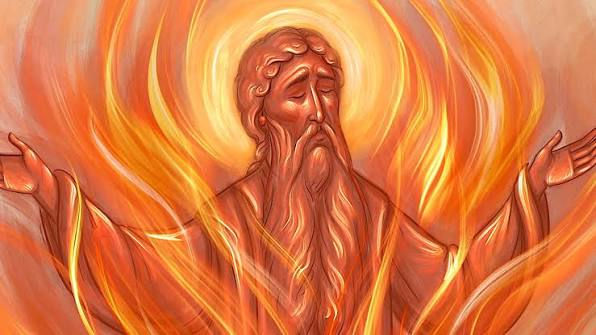
John had spent his entire life preparing the way for Someone else. He had lived in the desert. He had eaten locusts and wild honey. He had spoken without compromise before crowds and rulers alike. He had refused every temptation to make himself the center.
“I am not the Christ.”
“I am the voice.”
“There comes one mightier than I.”
“He must increase, but I must decrease.”
It is easy to admire those words while John is standing beside the Jordan.
It is another thing altogether to live them when the decreasing actually begins.
The Fathers understood this.
The desert strips away the imaginary self—the person we have constructed from usefulness, reputation, accomplishment, certainty, even religious identity. We enter imagining that God will perfect these things. Often He does something far more merciful.
He teaches us that we can live without them.
John does not merely preach decreasing.
He disappears.
And Christ calls him great.
That should make us reconsider nearly everything we mean by greatness.
“What did you go out into the wilderness to behold? A reed shaken by the wind?”
No.
John could be stripped of everything except the truth.
He could lose the crowds.
He could lose his freedom.
He could lose his public voice.
He could lose the ability to determine what happened next.
Eventually he would lose his life.
But he would not become a reed shaken by the wind.
There is a kind of stability that appears only after a person has ceased negotiating with reality.
This is one of the hardest lessons of the spiritual life.
We spend years asking God what we are supposed to become.
Perhaps eventually He asks whether we are willing to become nothing at all.
Not nothing in His eyes.
Nothing in our own.
Nothing that must be defended.
Nothing that must be maintained.
Nothing whose future must be secured.
John stands at the threshold of this mystery.
And perhaps this is why his question from prison is so important.
“Are you he who is to come?”
We should not hurry to rescue John from the question. Whether he asks for himself, for his disciples, or for both matters less than what Christ does with it.
Jesus does not offer John an explanation.
He does not tell him why he remains in prison.
He does not promise that Herod will release him.
He does not explain how John’s suffering fits into the divine plan.
He simply says:
“Go and tell John what you have seen and heard.”
The blind see.
The lame walk.
The lepers are cleansed.
The deaf hear.
The dead are raised.
The poor hear good news.
And then comes the terrible beatitude:
“Blessed is he who takes no offense at me.”
Blessed is the one who does not stumble when God is not what he expected.
Blessed is the one who can recognize the Kingdom even when it does not rescue him from his prison.
Blessed is the one who sees God working elsewhere and does not ask why that power has not been used to change his own circumstances.
This may be one of the purest forms of faith.
There comes a point when we discover that Christ has not promised to preserve the life we thought we were meant to live.
He may allow the form of our vocation to change.
He may allow our usefulness to diminish.
He may permit misunderstandings that we cannot correct.
He may close doors that once seemed essential.
He may lead us into a place where we can no longer explain ourselves by the roles that once gave coherence to our lives.
And from inside that place we may find ourselves asking:
Lord, is this really You?
The answer may not come as an explanation.
It may come as Presence.
Look.
Listen.
The Kingdom is still here.
Christ is still Christ.
And blessed is the one who does not take offense at the form in which He comes.
I have found myself thinking differently about John in recent years.
For much of my life I would have recognized him most readily at the Jordan: the ascetic, the preacher, the prophet, the man with a clear vocation and an uncompromising voice.
Now I find myself looking toward the prison.
Toward the John who can no longer go where he wishes.
The John whose world has narrowed.
The John who must entrust events to others.
The John who cannot see what comes next.
The John whose vocation appears, outwardly, to have been interrupted.
And yet nothing has gone wrong.
This too is the path.
Perhaps especially this.
There are obediences that look nothing like the life we imagined offering to God. There are seasons when holiness consists not in doing more for Him but in remaining where love has placed us. There are forms of hiddenness that feel like disappearance only because we have confused being seen with being alive.
The desert fathers fled precisely this confusion.
They knew how easily even holy work can become a way of possessing ourselves.
My ministry.
My vocation.
My community.
My usefulness.
My future.
My place in the Church.
Even the things genuinely given by God can become things we clutch in order to know who we are.
John opens his hand.
He must increase.
I must decrease.
And then Jesus says something astonishing:
“Among those born of women none is greater than John; yet he who is least in the kingdom of God is greater than he.”
John brings the old world to its summit.
And then Christ reveals something beyond greatness.
The Kingdom.
Here the categories by which we measure a life begin to collapse.
Great and small.
First and last.
Useful and useless.
Seen and hidden.
Successful and forgotten.
The Kingdom does not perfect these measurements.
It overturns them.
The least can be greater than the greatest because the Kingdom is not an achievement of the human person. It is gift. Participation. Communion. Life received rather than constructed.
This is why we must become small.
Not because God despises us.
Because our hands are full.
We are carrying identities, plans, reputations, grievances, achievements, fears, imagined futures—even our ideas about how we are supposed to serve God.
And Christ keeps inviting us deeper into the poverty where these things can finally be put down.
The last verses of this Gospel make the choice stark.
The tax collectors received John’s baptism.
The Pharisees and lawyers did not.
Luke says that they “rejected the purpose of God for themselves.”
Why?
Because baptism required them to descend.
To admit need.
To stand beside sinners.
To receive rather than manage.
The religiously accomplished could not become small enough.
That danger never disappears.
We can spend our entire lives near holy things and still resist the one movement upon which everything depends:
downward.
Into repentance.
Into poverty.
Into not knowing.
Into dependence.
Into the place where we can no longer save ourselves by being who we thought we were.
John shows us the way.
He goes before Christ not only into the wilderness but into diminishment.
He teaches us how to disappear without believing that we have ceased to matter.
He teaches us that a vocation can reach its fulfillment precisely when its familiar form is being taken away.
He teaches us that faith may eventually mean remaining in the prison and listening for reports of what Christ is doing elsewhere.
And he teaches us the sentence that perhaps contains the whole spiritual life:
“He must increase, but I must decrease.”
There is grief in that sentence.
But there is also extraordinary freedom.
I do not have to preserve myself.
I do not have to secure the meaning of my life.
I do not have to force the next chapter into existence.
I do not have to make Providence happen.
Christ is increasing.
That is enough.
Perhaps the path before us is much simpler than we imagine.
Tell the truth.
Refuse to become a reed shaken by the wind.
Remain where love has placed you.
Ask your questions without shame.
Do not demand that Christ justify the prison.
Do not take offense when His Kingdom comes differently than you expected.
Become small.
And when everything by which you once knew yourself begins to fall silent, listen.
Someone greater is approaching.
The voice was never meant to be the Word.
It only prepared the way.
And when the Word has come, the voice can become silent.
Not because its life has failed.
Because its work is complete.


Comments