_edited.jpg)
The Man Who Stops Running
Stillness and the Fierce Mercy of God

“Once a man has made up his mind to live his life in stillness, let him set himself in order and pass the rest of his days in the cultivation and regular practice of stillness.”
— St. Isaac the Syrian
There comes a moment in the spiritual life when a man must stop wandering among possibilities. He must stop negotiating with himself. Stop imagining ten different futures, ten different identities, ten different lives that might spare him the narrow way.
St. Isaac says: “Once a man has made up his mind…”
This is no small thing.
Because most of us never truly make up our mind.
We visit stillness.
We admire silence.
We romanticize the desert while secretly keeping the city alive within us.
Part of us wants God.
Part of us still wants distraction.
Part of us still wants recognition, explanation, comfort, movement, noise.
And so the soul remains divided.
Not evil perhaps. Not openly rebellious.
But divided.
The tragedy is that a divided heart can spend decades around holy things while never entering rest.
St. Isaac does not speak sentimentally about stillness because he knew what it costs. Stillness is not merely sitting alone in a quiet room. A man can sit in silence externally while inwardly carrying an entire marketplace within himself. He can leave the world geographically while still arguing, fantasizing, defending himself, replaying wounds, seeking admiration, constructing identities.
True stillness begins when a man ceases trying to save himself through movement.
This is why St. Isaac says: “let him set himself in order.”
The Fathers are fierce here.
Do not begin with lofty visions.
Begin with order.
Order your tongue.
Order your appetites.
Order your thoughts.
Order your prayer.
Order your life before God.
Otherwise stillness becomes fantasy and eventually delusion.
A soul without order cannot bear silence because silence reveals what disorder has hidden.
And this is why many flee.
Because in stillness the false self begins to suffocate.
The noise disappears.
The distractions thin out.
The performances no longer work.
A man begins to see himself as he actually is:
restless,
hungry for praise,
frightened of obscurity,
unable to remain with himself before God for even a little while.
Yet precisely there, if he does not flee, something holy begins.
Not dramatic visions.
Not immediate peace.
Often the opposite.
Dryness.
Boredom.
Exposure.
The painful revelation of how fragmented the heart has become.
But if he remains, the soul slowly descends beneath the turbulence.
Like muddy water left undisturbed, the heart begins to clear.
And there, beneath all the noise, he discovers something astonishing:
God was already waiting for him in the silence he feared.
Not the god of emotional excitement.
Not the god of religious performance.
But the living God.
The God who does not shout over our noise because He desires sons, not slaves intoxicated on stimulation.
Stillness is terrifying because it removes what we use to avoid Him.
But it is beautiful for the same reason.
A man who perseveres in stillness eventually becomes simple.
He no longer needs to appear important.
He no longer needs constant reassurance.
He no longer needs to force meaning into his life.
He begins merely to remain before God.
And in that remaining, the heart softens.
Prayer deepens.
Love becomes quieter and more real.
The world will look upon such a life and see almost nothing.
But the Fathers would say:
a man who has learned stillness has begun to stand at the edge of eternity.
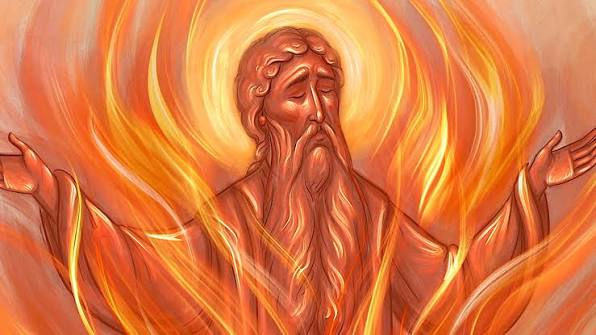


The challenging thing with stillness, at its core, I think, is you're alone with God whom you love deeply but can't feel, see, or touch. And what starts to stir in the heart, at times, is a desire for another human heart, even just to be with you in the stillness.