_edited.jpg)
The Eight Fires That Shape the Soul
How the Passions Work Within Us and How the Fathers Teach Us to Be Healed

“Give blood, and receive Spirit.”
Abba Longinus, Sayings of the Desert Fathers
The Desert Fathers never treated the passions as moral failures to be crushed by willpower. They understood them as distorted energies of the soul. Each passion begins as something natural and necessary. Hunger, desire, self-preservation, sorrow, zeal, rest, honor, and self-awareness were given by God for life and communion. When these energies lose their orientation toward God, they turn inward and become destructive.
The Fathers mapped the eight vices not to burden the struggler but to give clarity. What is named can be faced. What is faced can be healed.
Gluttony is the first distortion because it trains the soul to obey appetite rather than truth. At the surface, gluttony appears as overeating or obsession with food. More deeply, it is impatience with limitation. The gluttonous heart resents waiting and resents dependence. Subtly, it shows itself as constant grazing, not only on food but on stimulation. Endless scrolling, compulsive reading, spiritual bingeing, chasing talks, podcasts, or prayers without digestion are all forms of this passion.
The Fathers prescribe fasting not as punishment but as education. Regular meals, simple food, gratitude before and after eating, and stopping before fullness teach the body that it is not abandoned when restrained. Modern elders insist that fasting must be paired with prayer, or it becomes another form of control. We fast so that hunger itself becomes prayer.
Lust is desire torn loose from communion. It is eros severed from self-offering. Overt lust manifests in sexual sin, fantasy, and compulsive behaviors. Subtle lust hides in emotional entanglements, spiritual infatuations, and the longing to be uniquely understood or needed. It feeds the imagination endlessly.
The Fathers are uncompromising about the imagination because they know that repeated images carve grooves in the heart. Their remedy is early intervention. Guard the senses. Cut off the thought at its first appearance. Do not dialogue. Do not analyze. Replace images with the Name of Jesus, spoken simply and repeatedly. Modern elders emphasize that lust weakens as love deepens. When eros is steadily turned toward Christ, lesser fires lose their fascination.
Avarice is fear disguised as prudence. It is the belief that life depends on what I secure and control. Overt avarice hoards money, possessions, and power. Subtle avarice clings to roles, reputations, ministries, credentials, and carefully constructed plans. It fears loss more than sin.
The Fathers counter avarice with almsgiving and voluntary simplicity. Giving must cost something, or it does not heal. Modern elders confirm that trust is learned through concrete acts. Giving money, time, attention, and security retrains the heart to rest in God rather than in backup plans.
Sadness becomes a passion when sorrow turns inward and collapses into self-pity. Godly sorrow opens the heart to repentance. Passionate sadness closes the heart around disappointment. Overtly, it appears as despair, paralysis, and bitterness. Subtly, it lingers as nostalgia, quiet grievance, and chronic dissatisfaction with God’s providence.
The Fathers prescribe thanksgiving, even when it feels false, manual labor, stability in prayer, and refusal to indulge dark thoughts. Modern elders teach that enduring sadness without complaint purifies the heart. Resurrection joy is not emotional relief. It is the fruit of fidelity in darkness.
Anger arises when the ego feels threatened. It is zeal detached from humility. Overt anger explodes in words, violence, or dominance. Subtle anger cools into judgment, sarcasm, irritation, and withdrawal. The Fathers warn that anger poisons prayer more quickly than almost any other passion.
Their remedies are silence, delay, and remembrance of one’s own sins. Do not speak while angry. Pray for the person who wounded you by name. Modern elders emphasize that anger heals only when self-justification dies. Humility dissolves the need to defend the self at all costs.
Acedia, the noonday demon, is especially dangerous for those pursuing a serious spiritual life. It whispers that your place is wrong, your rule is pointless, and your efforts are meaningless. Overt acedia abandons prayer and discipline. Subtle acedia disguises itself as discernment, constant reevaluation, and the restless search for a better path.
The Fathers respond with ruthless simplicity. Stay in your cell. Keep the rule. Do the next small task. Modern elders add that acedia dies when love becomes concrete. Do something for someone else without waiting to feel motivated.
Vainglory is the hunger to be seen. It feeds on praise and withers in obscurity. Overt vainglory boasts. Subtle vainglory hides behind humility, correctness, and spiritual seriousness. It wants to be admired for not wanting admiration.
The Fathers insist on hiddenness. Perform good deeds without witnesses. Accept misunderstanding without explanation. Modern elders warn that vainglory especially targets those who teach, serve, or lead. Only a life lived before God alone, without an audience, can heal it.
Pride is the root from which all the others draw strength. It is self-reliance hardened into identity. Overt pride dominates and refuses correction. Subtle pride spiritualizes itself and believes it no longer needs guidance, obedience, or repentance.
The Fathers answer pride with obedience, confession, remembrance of death, and the continual invocation of the Name of Jesus. Modern elders insist that humility is not self-hatred but reality. To see oneself as one truly is before God is freedom.
The Fathers never promised quick victory over the passions. They promised transformation through patience. The passions are not erased but reoriented. Hunger becomes fasting. Desire becomes love. Fear becomes trust. Sorrow becomes compunction. Anger becomes zeal for God. Restlessness becomes vigilance. Honor becomes gratitude. Self-awareness becomes humility.
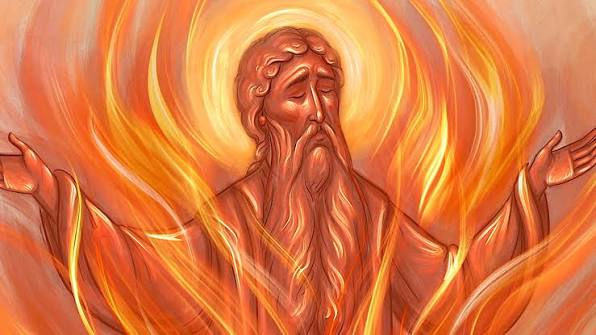
This path is slow and often humiliating. Progress is measured not by victory but by honesty. When the heart stops lying to itself, healing begins. Over time, the same fires that once consumed the soul become light. The heart learns to burn without being destroyed and to live, at last, facing God.
⸻
Note:
During a recent gathering to read St. Isaac the Syrian, questions arose about the nature of the vices and how they work in both overt and subtle ways. This reflection is offered as a primer for discernment, not as a system, but as an aid for those seeking repentance in truth as we move toward Great Lent.
⸻
Bibliography and Suggested Reading
Core Desert Fathers on the Passions
Evagrius Ponticus. Praktikos and Chapters on Prayer.
Trans. John Eudes Bamberger. Cistercian Publications.
A foundational guide to the eight thoughts, their progression, and their healing through watchfulness and prayer.
Evagrius Ponticus. Talking Back: A Monastic Handbook for Combating Demons.
Trans. David Brakke. Cistercian Publications.
A practical companion to the Praktikos, demonstrating how Scripture and prayer are used to counter intrusive thoughts.
John Cassian. The Institutes.
Trans. Boniface Ramsey. Newman Press.
Books V–XII offer the most systematic patristic treatment of the eight vices and their remedies in communal and solitary life.
John Cassian. The Conferences.
Trans. Boniface Ramsey. Newman Press.
Especially Conferences V, IX, and X, addressing purity of heart, anger, and acedia.
The Sayings of the Desert Fathers.
Trans. Benedicta Ward. Cistercian Publications.
The lived ascetical wisdom behind the theory, revealing how the passions are confronted in daily struggle.
⸻
The Philokalic Tradition
The Philokalia, Volumes I–V.
Trans. G. E. H. Palmer, Philip Sherrard, and Kallistos Ware. Faber and Faber.
Especially Evagrius Ponticus, St Mark the Ascetic, St Hesychios, and St Maximos the Confessor on watchfulness, prayer, and the purification of the heart.
Maximos the Confessor. Four Hundred Texts on Love.
In The Philokalia, Vol. II.
A theological synthesis showing how the passions are healed and transformed through divine love.
⸻
Syriac and Eastern Fathers
Isaac the Syrian. The Ascetical Homilies.
Trans. Dana Miller. Holy Transfiguration Monastery.
A deeply experiential account of compunction, humility, mercy, and the gentle pedagogy of God in healing the passions.
⸻
Modern Elders and Contemporary Witness
Sophrony of Essex. We Shall See Him as He Is.
Stavropegic Monastery of St John the Baptist.
On self-knowledge, humility, and the purification of the person before God.
Sophrony of Essex. On Prayer.
Stavropegic Monastery of St John the Baptist.
Essential for understanding imagination, desire, and the struggle for inner stillness.
Zacharou, Archimandrite Zacharias. Christ, Our Way and Our Life.
Stavropegic Monastery of St John the Baptist.
A clear presentation of the passions as distorted energies healed through obedience and prayer.
Zacharou, Archimandrite Zacharias. Man the Target of God.
Stavropegic Monastery of St John the Baptist.
On pride, self-justification, and the therapeutic aim of the spiritual life.
Paisios of Mount Athos, St. Spiritual Counsels, Volumes I–V.
Holy Monastery “Evangelist John the Theologian.”
Concrete pastoral guidance on both overt and subtle manifestations of the passions.
Porphyrios of Kavsokalyvia, St. Wounded by Love.
Denise Harvey.
On eros healed and transfigured through love for Christ.
⸻
A Reading Path for Great Lent
For those wishing to enter Great Lent with sobriety and depth, the Fathers counsel few books read slowly, rather than many read hastily. The following progression aligns naturally with the ascetical rhythm of the Fast.
Weeks of Preparation and Clean Week
Evagrius Ponticus. Praktikos.
Focus on identifying thoughts, learning watchfulness, and beginning restraint without self-accusation.
Weeks Two and Three of Lent
John Cassian. The Institutes, Books V–XII.
Attend carefully to anger, sadness, and acedia as they arise when fasting deepens.
Mid-Lent
Selections from The Sayings of the Desert Fathers.
Let concrete examples interpret your own struggle rather than abstract analysis.
Weeks Four and Five of Lent
Isaac the Syrian. Ascetical Homilies (selected homilies).
Allow the heart to soften toward mercy, humility, and patient endurance.
Holy Week
Sophrony of Essex. On Prayer or Zacharias Zacharou. Man the Target of God.
Turn attention from self-analysis to surrender, silence, and standing before God without defense.


Comments