_edited.jpg)
When the Heart Has Tasted God
Taking Hold of Grace and the Stronger Attraction of Divine Love
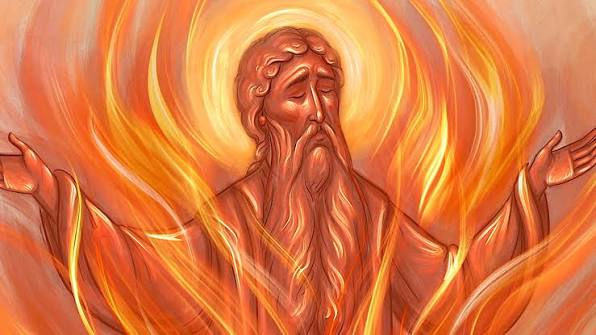
“My soul thirsted for Thee, the mighty, the living God! When shall I come and appear before Thy face, O Lord?”
— St. Isaac the Syrian, Homily 19
Synopsis of Tonight’s Group on The Ascetical Homilies of St. Isaac the Syrian Homily 19 paragraphs 2-7
There is a danger in reading passages such as this one from St. Isaac and hearing primarily a warning: Do not become negligent. Do not allow yourself to grow lax. Guard your solitude. Avoid unnecessary conversation. Do not permit the mind to become scattered.
Certainly Isaac is warning us. His language is deliberately severe because he knows how fragile the beginnings of prayer can be. A heart newly awakened to God is like the tender blossom of a fruit tree. It possesses within itself the promise of fruit, but it can still be injured by a sudden frost. The mind that has begun to discover stillness can quickly become dispersed again. The heart that has tasted the sweetness of prayer can become strangely cold.
But if we hear only the warning, we may miss something much more beautiful in Isaac’s words.
The great concern of Homily 19 is not simply that we avoid negligence. It is that we recognize what has been given to us and take hold of it.
Isaac is speaking to men and women who have tasted something.
They have tasted God.
“If fiery thoughts arise in you,” he writes, “through the consuming flame of divine things,” and you “enjoy a taste of God,” then guard what has been given to you.
That changes everything.
The ascetical life is not primarily the anxious preservation of spiritual discipline. It is the response of the heart to a gift. We guard prayer because we have discovered Someone in prayer. We seek stillness because within stillness we have begun to hear the voice of the Beloved. We withdraw from unnecessary occupations not because created things are evil, but because something infinitely more precious has begun to draw the heart.
This is why Isaac can speak so dramatically about the loss of fervor.
“Only the man who drinks deeply of this wine, and afterward is deprived of it, only he knows to what misery he has been abandoned.”
One cannot miss the language of desire here.
The tragedy is not simply that the monk has broken his rule. The tragedy is that he has allowed himself to become separated from something he has tasted and loved.
He knows the wine.
He remembers its sweetness.
And now he thirsts.
This is the deeper meaning of vigilance.
Negligence Is Forgetfulness
Negligence in the spiritual life is rarely simply laziness. At its deepest level it is forgetfulness.
The heart forgets what it desires.
Isaac tells us that through excessive conversation, unnecessary occupations, sensory dispersion, and involvement in countless affairs, “the object of her desire is blotted out from her mind.”
That sentence may be the key to the entire passage.
The object of her desire is blotted out.
The danger of distraction is not merely that it wastes time. It obscures desire.
We begin to forget why we are alive.
We may continue doing many good things. We may remain religious. We may fulfill responsibilities. We may even continue praying. Yet somewhere beneath all this activity, the memory of God can grow faint.
And once that memory fades, lesser desires begin to fill the empty space.
The Fathers understood this with extraordinary psychological depth. The heart cannot remain without desire. If it ceases to be gathered toward God, it will inevitably become scattered among countless lesser things.
This is why Isaac says:
“Do not multiply your occupations, and you will not find turmoil in your mind, or in your prayer.”
He is not preaching inactivity. He is teaching simplicity of heart.
The question becomes: What possesses my attention because it possesses my desire?
Take Hold of Grace
There is another danger, however, subtler than negligence.
We may imagine that because everything depends upon grace, we need only wait passively for God to act.
Isaac knows nothing of such passivity.
When grace visits the heart, take hold of it.
When prayer becomes warm, remain there.
When tears come, do not hurry away from them.
When desire for God awakens, feed it.
When silence begins to gather the mind, protect that silence.
When the Name of Jesus descends even slightly from the lips toward the heart, treasure it.
Not because grace can be possessed or controlled, but because love asks for a response.
There is a holy cooperation between divine grace and human freedom. God awakens the heart, and the heart turns toward Him. God gives the thirst, and we begin to drink. God lights the flame, and we cease throwing cold water upon it through negligence.
This is why the Fathers can sound simultaneously so uncompromising about asceticism and so utterly dependent upon grace.
There is no contradiction.
Asceticism is what love looks like when freedom responds to grace.
The Stronger Attraction
And here we reach something even deeper.
Isaac does not ultimately believe that the Christian life is sustained by fear of distraction.
It is sustained by attraction.
The lesser things of life pull upon us. Conversation pulls upon us. Curiosity pulls upon us. Responsibilities pull upon us. Memories, anxieties, pleasures, opinions, news, recognition, work—all of these exert a gravitational force upon the heart.
But there is another gravity.
Divine love.
And it is stronger.
The spiritual life matures when we discover that holiness is not primarily a heroic attempt to tear ourselves away from the world. It is allowing ourselves to be drawn increasingly by the beauty of God.
The Psalmist does not cry:
My soul has disciplined itself for Thee.
He cries:
“My soul thirsted for Thee.”
Thirst is attraction.
Desire is attraction.
Love is attraction.
The heart has glimpsed the Face for which it was created, and suddenly everything else begins to reveal its proper measure.
This is why the saints sometimes appear almost incomprehensible to us. Their detachment can look severe from the outside. But from within, something very different is happening.
They are being drawn.
Christ has become more beautiful than everything they have relinquished.
The Memory of the Wine
Perhaps this is why God sometimes permits us to experience the loss Isaac describes.
We have known moments when prayer was alive.
Moments when the Name of Jesus seemed to contain everything.
Moments when silence was not empty but filled with Presence.
Moments when tears came without effort.
Moments when we knew—not merely intellectually, but existentially—that God was near.
And then the heart became cold.
We became distracted.
We multiplied our occupations.
We returned to noise.
The temptation is to despair over this.
Isaac gives us another way.
Remember the wine.
The memory of grace itself can become a summons.
Not nostalgia for a spiritual experience, but remembrance of the One who gave Himself within it.
The coldness reveals the thirst.
The absence reveals the desire.
And the heart begins again:
Where are You?
Why have I wandered so far from what my soul desires?
When shall I come and appear before Your face?
Even our sorrow over having lost the sweetness of prayer can become prayer.
“If You Will”
There is something here that echoes the great saying of Abba Joseph:
“If you will, you can become all flame.”
Not because we manufacture the fire.
The fire is God.
The desire is awakened by God.
The grace is given by God.
The attraction originates in God.
But the human will must consent to being consumed.
This is the dignity and trembling mystery of our freedom.
Grace comes and says:
Remain.
And we must choose whether to remain.
Love draws and says:
Come.
And we must choose whether to follow.
The flame rises and says:
Give yourself.
And we must decide whether we will continue protecting the thousand little things that keep us divided, or allow ourselves finally to belong to the One who desires the whole heart.
Isaac’s severity therefore conceals extraordinary tenderness.
He is not telling us merely:
Be careful what you lose.
He is telling us:
Look at what you have found.
You have tasted something more precious than everything that distracts you.
You have discovered the hidden wine.
You have felt the beginnings of the fire.
You have heard within yourself the ancient cry:
“My soul thirsted for Thee, the mighty, the living God.”
Do not be afraid merely of negligence.
Be afraid of forgetting what your heart has discovered.
And then turn again.
Take hold of the grace that has taken hold of you.
For beneath all our seeking is a greater seeking. Beneath our thirst is a deeper thirst. Beneath our desire for God is the immeasurably greater desire of God for us.
In the end, it is not our weak attraction toward Him that will carry us home.
It is the stronger pull of His love.
Our task is to cease resisting it.
To remain.
To consent.
And, if we will,
to become all flame.


Comments