_edited.jpg)
The Basket of Sand
On the Terror of Judging Others While Blind to Ourselves

“My sins are flowing out behind me, and I do not see them; and yet, I have come today to judge someone else’s sins.”
— Abba Moses the Black, The Evergetinos
There is something terrifying in this story, and it is not the brother’s sin.
It is how quickly holy men gathered to judge it.
The desert fathers were not naïve about sin. They did not sentimentalize evil. They fasted until their bones ached. They wept over passions. They fled impurity, vanity, greed, lust, ambition, and self-deception with a violence most modern Christians would find unbearable. They knew that sin destroys the soul.
And yet the Fathers feared judgment of others even more.
Because they understood something we do not.
The man who judges another has already stopped looking at himself.
That is the beginning of spiritual death.
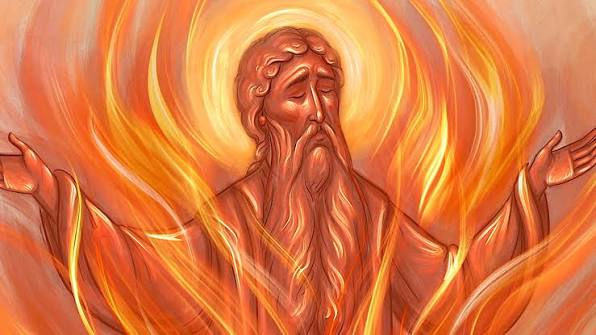
Abba Moses comes carrying a basket full of sand with holes in it. The image is almost unbearable in its honesty. His sins are pouring out behind him. They trail after him everywhere he goes. He says: “My sins are flowing out behind me, and I do not see them; and yet, I have come today to judge someone else’s sins.”
That is the human condition.
We see everyone else with terrifying clarity and ourselves through fog.
We notice another person’s arrogance while feeding secretly upon our own superiority. We condemn impurity while nurturing fantasies in the heart. We rage against another’s dishonesty while living by subtle self-deception every day. We expose the failures of others because it distracts us from the abyss within ourselves.
Judgment gives the illusion of innocence.
That is why fallen man loves it so much.
A man can feel righteous simply by finding someone worse than himself.
This is why the Fathers speak so fiercely about condemnation. Not because discernment is unnecessary. Not because evil is unreal. But because judgment feeds the ego while pretending to defend righteousness.
The ego loves moral outrage.
It loves being “right.”
It loves standing above.
It loves the intoxicating feeling of clarity about another person’s darkness.
And all the while the heart becomes hard, cold, blind, and incapable of repentance.
The truly repentant person does not feel morally superior to sinners. He feels horror at his own capacity for evil. He knows that apart from grace he could become anything. He no longer stands outside humanity condemning it. He stands inside it weeping.
That is why the saints become merciful.
Not permissive.
Not sentimental.
Merciful.
There is a kind of religious person who speaks endlessly about truth but has never once descended into the truth about himself. He knows doctrines, moral categories, and the sins of the age, but he does not know his own heart. So he becomes dangerous. He begins to wield “truth” as a weapon against others while remaining untouched himself.
The desert fathers feared becoming this kind of man more than almost anything else.
For the proud moralist can speak about God while no longer resembling Him.
Christ did not say the world would know His disciples by the precision of their condemnations.
He said they would be known by love.
And love is impossible without humility.
This is why those closest to God become increasingly severe toward themselves and increasingly gentle toward others. The closer they draw to divine light, the more dust they see within themselves. They no longer have energy left for condemnation because repentance consumes them entirely.
A man who has truly seen his own soul has no stones left in his hands.
The tragedy is that judgment feels like strength when it is usually blindness.
Most of us are carrying baskets like Abba Moses whether we know it or not. Our sins are pouring out behind us continuously: vanity, resentment, self-love, cowardice, lust for recognition, secret contempt, hardness of heart, refusal to forgive, spiritual pride. And while the sand pours out endlessly behind us, we sit in judgment over others as though we ourselves were whole.
The saints trembled before this.
We joke about it.
We build entire identities around it.
Entire religious cultures now feed upon outrage, exposure, condemnation, and public humiliation. People devour the failures of others because it gives them a temporary sense of purity.
But the soul becomes incapable of tears.
And a man who can no longer weep for himself will eventually crucify his brother in the name of righteousness.
Abba Moses saved the brother that day.
But he also saved the other Fathers.
He reminded them that the only safe place for a Christian is not above another sinner, but beside him.
Begging for mercy together.


Comments