
When Christ Becomes the Light by Which We See
The Christian life is not merely learning what is true, but becoming transparent to the Light who is Christ

“Your word is a lamp to my feet and a light to my path.”
— Psalm 118:105 LXX
Saint Maximus tells us something far greater than that Christ gives us light. Christ is the Light. He is the lamp set upon the lampstand, the eternal Word of the Father who has entered our darkness by assuming our humanity. He does not merely explain the path. He becomes the path beneath our feet. He does not simply tell us what is true. He illumines the eyes by which truth may be seen.
There is an immense difference between these things.
We can spend much of our lives collecting words about God while remaining strangely untouched by the fire hidden within them. We can know Scripture, theology, doctrine, the sayings of the Fathers. We can defend them, teach them, write about them. Yet Maximus warns that even the sacred word can remain beneath the bushel when it is held only according to the letter and never allowed to descend into the depths of the heart.
The Fathers never despised the letter. They feared something subtler: that we might possess the words while remaining strangers to the Reality toward which they point.
The desert was born from this hunger.
Men and women fled into silence because they wanted the Gospel to cease being something merely spoken and become something lived in the flesh. “Love your enemies.” “Sell what you possess.” “Pray without ceasing.” “Take up your cross.” “Blessed are the pure in heart, for they shall see God.”
They discovered that the words of Christ are inexhaustible because Christ Himself is inexhaustible.
This is why Maximus joins contemplation to action. The lamp is lit through both. We obey, and obedience clears the eye. We pray, and prayer gathers the scattered mind. We repent, and repentance removes what has obscured the heart. We become still, and gradually what once appeared to us only as an idea begins to reveal itself as life.
The commandments cease to feel like external demands imposed upon us. They become windows.
Through them we begin to see Christ.
Saint Isaac the Syrian speaks with this same interior grammar. Purity of heart is not principally moral achievement. It is the restoration of sight. As the heart is healed, it begins to perceive what was always there: the mercy of God surrounding creation, sustaining it, pursuing it with an incomprehensible love. The purified heart does not merely think differently about God. It sees differently because it has begun to love differently.
This is why the spiritual life eventually strips us of so much certainty.
There are seasons when God seems to remove the lamps by which we once navigated. Roles become uncertain. Institutions disappoint us. vocations take forms we never anticipated. People whom we love diminish before our eyes. Futures carefully imagined disappear. Even our understanding of ourselves may become strangely inadequate.
At first this feels like darkness.
Perhaps sometimes it is darkness.
But there is another possibility.
God may be teaching us the difference between the lamps we have carried and the Light itself.
I have come to know something of this distinction only slowly. There have been years of reading the Fathers, teaching them, writing about them, sitting with Isaac, Maximus, the desert elders, and those modern elders who seem to have breathed the same air. Yet increasingly their words have seemed less like subjects to be studied and more like a language the heart was learning without my realizing it.
And eventually a language learned deeply enough begins to shape what one can see.
Mercy begins to look different.
Repentance begins to look different.
The Church begins to look different.
Suffering begins to look different.
Silence begins to look different.
Even loss begins to look different.
Not because the losses cease to wound us. They do not. The broken string remains broken. The person we love may continue to diminish. The future may remain hidden. Questions may remain unanswered. Nothing in Maximus promises that Christ illuminates the road by showing us its entire length.
A lamp gives enough light for the next step.
Perhaps this is one of the hardest lessons of faith.
We want illumination to mean explanation. God often gives us presence instead.
We ask Him to show us where everything is leading. He gives us Christ.
We ask for certainty. He gives us the next commandment.
We ask for the map. He says, Follow Me.
And slowly the soul discovers that this is enough.
The modern elders understood this profoundly. The heart purified through repentance and prayer does not become a heart possessing answers. It becomes a heart capable of standing before mystery without fleeing from it. It learns to remain before God when explanations fail. It learns that darkness is not necessarily abandonment. Sometimes it is simply the place where every lesser light has been extinguished so that we may discover the Light that cannot be extinguished.
Perhaps this is why the Jesus Prayer becomes so precious.
There is almost nothing left to explain.
Lord Jesus Christ, Son of God, have mercy on me.
Name.
Presence.
Mercy.
The whole life gradually gathers there.
And perhaps this is also why Maximus insists that the lamp belongs upon the lampstand of the Church. Illumination is never merely private enlightenment. Christ gathers us into His Body. The light given to one is given for all. Whatever knowledge of God we receive is authenticated not by its brilliance but by what it produces: humility, repentance, mercy, patience, obedience, tenderness toward the suffering, and love even for those who wound us.
The true contemplative does not become impressive.
He becomes transparent.
That may be the hidden vocation of every Christian: not to become another light competing with Christ, but to become transparent enough that His light passes through us without obstruction.
Perhaps much of the spiritual life is simply the breaking of that obstruction.
Our ambitions.
Our fear.
Our need to be understood.
Our insistence upon controlling the shape of our lives.
Our desire to know beforehand where obedience will lead.
Even our carefully constructed identities.
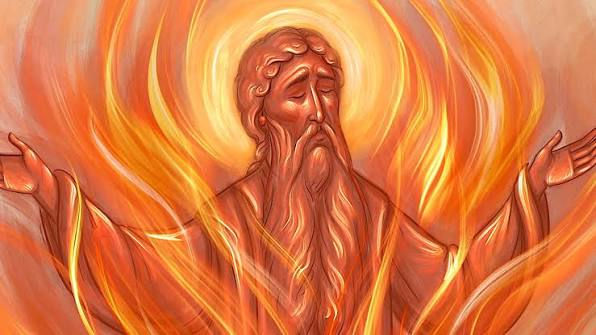
One by one they are placed into the fire.
And what remains?
Christ.
Not Christ as an idea among other ideas.
Not Christ as the justification of the life we wanted.
Not Christ enlisted in defense of ourselves.
Christ Himself.
The Light from the Father.
The lamp upon the lampstand.
The Word who became flesh and entered the darkness.
And perhaps, after many years of searching, suffering, praying, writing, losing and beginning again, the soul discovers that it no longer needs to see very far.
Only enough to place the next foot upon the path.
Only enough to remain.
Only enough to whisper the Name.
The road beyond that may remain hidden.
But the Light is here.
And the Light is enough.


Comments