_edited.jpg)
The Grace of Disappearing
On the Difference Between the Loss of Self and the Loss of Illusion

“I sat alone because Thou hadst filled me with indignation.”
— Book of Jeremiah 15:17
There is a way of speaking about “disappearing” that is dangerous, because it easily collapses into something else entirely. One imagines silence, withdrawal, the refusal to assert oneself, and assumes this is the same as vanishing. But the Fathers, and even the deeper currents of psychoanalytic thought, would resist such a confusion. They would insist that not all forms of absence are equal. Some are the condition for truth. Others are its destruction.
From a psychoanalytic perspective, what appears as disappearance can in fact be a movement toward greater presence. The false self—the constructed identity built to secure love, recognition, coherence—must, in some sense, recede. Its narratives lose their force. Its compulsions weaken. One stops speaking in order to be seen, stops producing in order to exist. This can feel like a kind of dying. There is less to point to, less to claim. The familiar markers of identity begin to fall away.
But this is not erasure.
Erasure, psychologically, is something altogether different. It is not the relinquishment of illusion but the collapse of the subject. It carries the mark of despair, of non-being, of the belief that there is nothing worth remaining. It is often driven by shame or by a history of not being received, where the only perceived safety lies in becoming nothing at all. Where true disappearance opens space for desire to become purified, erasure extinguishes desire entirely. One no longer speaks, not out of freedom, but because there is no one left who feels permitted to speak.
In this sense, psychoanalysis would say that true “disappearing” is not the annihilation of the self but the stripping away of its defensive architecture. What remains is more vulnerable, less adorned, but more real. A subject who no longer needs to constantly assert himself can finally begin to encounter reality, and others, without distortion.
The spiritual tradition speaks with even greater severity, but also with greater clarity.
To disappear, in the language of the Fathers, is not to become nothing, but to cease being the center. It is the relinquishment of self-will, self-justification, self-definition apart from God. It is to go into the desert of the heart where one no longer seeks to be seen, remembered, or affirmed. One consents to hiddenness, to poverty, to a life that bears no visible fruit.
Yet here again, this is not erasure.
Spiritual erasure would be the loss of the person, the extinguishing of the heart, the refusal of relationship. It would be a kind of nihilism cloaked in ascetic language. One might still pray, fast, or keep vigil, but inwardly there is a deadness, a closing, a refusal to be encountered even by God. This is not humility. It is a subtle despair.
True spiritual disappearance, by contrast, is intensely relational. It is the surrender of the self into the hands of God, not the destruction of the self as such. The person becomes hidden, but not absent. In fact, paradoxically, the more one disappears in this sense, the more one becomes capable of true presence. Freed from the need to assert, defend, or justify oneself, one begins to love without calculation. One becomes transparent.
The great witnesses of the desert did not erase themselves. They became almost unbearable in their presence, precisely because there was so little of “themselves” left in the egoic sense. What remained was a heart enlarged, a consciousness purified, a person who could contain others without needing to possess them.
Erasure says: I must not exist.
Disappearance says: I no longer need to insist that I exist.
The difference is everything.
One is born of despair and leads to silence as void.
The other is born of love and leads to silence as fullness.
And it is here that the discernment becomes painfully concrete.
If the movement toward silence, toward hiddenness, toward “doing less,” is accompanied by a quiet deepening of the heart, a growing capacity to bear reality, to love, to pray—even if all of this feels stripped and without consolation—then one is moving toward true disappearance.
But if it is accompanied by contraction, by numbness, by the sense that one is slipping out of being altogether, then something else is at work. Not the desert of God, but the abyss of the self left to itself.
The path one senses here is real. But it requires vigilance. Because the line between relinquishing the self and abandoning the self can appear very thin.
The Fathers would say: descend, but do not let go of the hand of God.
Psychoanalysis would say: let the false constructions fall, but do not betray the subject that suffers and desires.
Both, in their own way, are guarding the same mystery.
That one must disappear.
But never be erased.
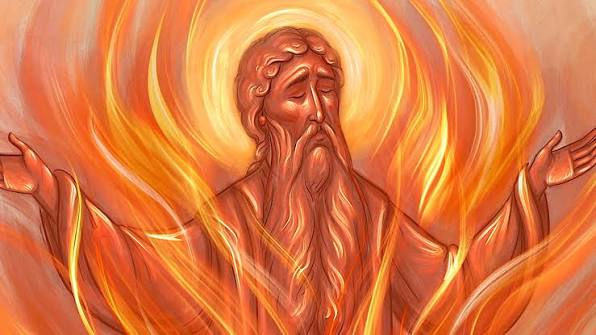


Lord, continue to slowly help me descend. I will never let go of your hand. May your grip guide me. Hallelujah.