_edited.jpg)
When the One Thing Necessary Is Lost
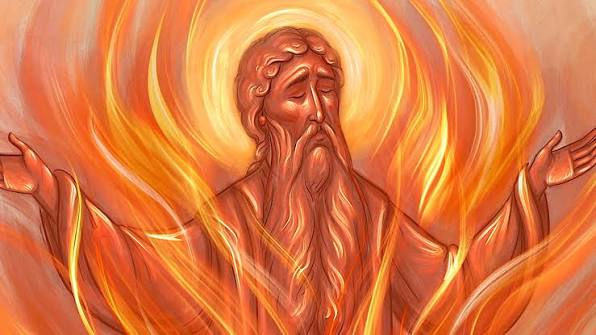
St. Isaac the Syrian and the Terrible Sorrow of a Heart That Has Tasted God and Turned Again Toward the World

“Mary has chosen the good portion, which shall not be taken away from her.”
— Luke 10:42
There are losses that break the heart.
A person dies. A friendship disappears. A home is lost. A community changes beyond recognition. A vocation once imagined no longer seems possible. The work of decades passes into other hands or simply fades away. Age takes strength from the body. Time takes people from our table. Things we believed would accompany us to the end are suddenly gone.
Christianity does not teach us to become indifferent to such losses.
Christ wept.
The Fathers wept.
Love makes grief possible because grief is often simply love discovering that it can no longer possess the beloved in the manner it once did.
But St. Isaac the Syrian knows another grief.
It is quieter and more terrible.
It is possible to lose something infinitely more precious than anything death can take from us.
We can lose the felt intimacy of God.
Not because God has abandoned us. Not because His mercy has diminished. Not because He has ceased loving us.
But because the heart that had begun to live before Him has turned again toward many things.
Perhaps not toward anything obviously sinful.
That is what makes the danger so subtle.
We may simply begin looking outward again.
We begin talking more.
Planning more.
Following what is happening.
Wondering what others think.
Revisiting old injuries.
Defending ourselves.
Imagining futures.
Managing outcomes.
Seeking consolation in activity.
Allowing the mind to graze once more among the countless things of this world.
None of these movements may appear catastrophic.
Yet the Fathers understood that the heart can lose through a thousand tiny dispersions what it received through long stillness.
The lamp does not always go out in a storm.
Sometimes it simply runs out of oil.
The Memory of Sweetness
There is a particular suffering known to the person who has tasted stillness.
Before tasting it, the noise of the world seems normal. Distraction seems normal. Interior fragmentation seems normal. One moves from thought to thought, conversation to conversation, desire to desire, scarcely realizing that another manner of existence is possible.
Then, perhaps through grace, something changes.
The heart becomes quiet.
The Name of Jesus begins descending beneath thought.
Prayer ceases to feel merely like something we do and becomes something closer to breathing.
Silence no longer feels empty.
Solitude no longer feels lonely.
The Scriptures begin to open from within.
Night becomes precious.
The cell becomes spacious.
One discovers what the Fathers meant when they spoke of the heart as a kingdom.
Nothing outward may have changed.
And yet everything has changed because God has become enough.
This is the sweetness of which Isaac speaks; not sentimental religious consolation, but the mysterious simplicity of a heart beginning to gather itself wholly into God.
And once the soul has tasted this, it can never entirely forget.
That memory becomes both mercy and wound.
For if the heart turns again toward dispersion, it knows what it has lost.
The world may offer back all its pleasures and consolations, its conversations and accomplishments, its recognition and possibilities.
But somewhere beneath them remains the terrible remembrance:
There was something more.
There was a silence in which I knew Him.
There was a simplicity in which nothing else was necessary.
There was a prayer that seemed to pray itself within me.
There was a poverty in which I possessed everything because I desired only God.
And I exchanged it for many things.
We Know How to Mourn Almost Everything Else
We understand worldly grief.
We know how to mourn the death of someone we love.
We mourn the loss of health.
We mourn communities that disappear, friendships that end, ministries that close, opportunities that never return.
And rightly so.
But we also grieve things because we have secretly made them gods.
We mourn recognition because we needed to be seen.
We mourn influence because we needed to matter.
We mourn institutions because we confused the vessel with the Treasure.
We mourn roles because we had begun to derive our identity from them.
We mourn imagined futures because we had quietly demanded that Providence conform itself to our plans.
Sometimes our grief reveals our love.
Sometimes our grief reveals our idols.
The desert is mercilessly compassionate here. It asks the question we would rather avoid:
What loss do I believe would make my life no longer worth living?
The answer may reveal what has become our god.
And yet there is one loss the saints feared above all others.
Not poverty.
Not obscurity.
Not rejection.
Not the collapse of their plans.
Not even death.
They feared losing the remembrance of God.
They feared the cooling of love.
They feared the heart becoming insensitive again after grace had made it tender.
They feared returning to distraction after discovering stillness.
They feared becoming accustomed again to living without consciously abiding in the presence of the Beloved.
The Great Tragedy Is Not That the World Passes Away
Everything passes.
The Fathers did not say this because they despised creation. They said it because they loved reality.
Beauty passes.
Youth passes.
Strength passes.
Reputation passes.
Institutions pass.
Our works pass.
People pass from our sight.
Even the most beautiful things God gives us cannot become our permanent dwelling place.
They were never meant to be.
They are signs.
They are gifts.
They are sometimes sacraments of His tenderness.
But they are not God.
The tragedy, therefore, is not that the world cannot satisfy the heart.
The tragedy is that having discovered the One who can satisfy it, we return to begging satisfaction from the world.
This is why Isaac can sound almost severe when speaking about stillness.
He has seen the Treasure.
Once you know what is hidden in the field, everything changes.
The question is no longer how much of the world one is permitted to possess.
The question becomes:
Why would I leave the Treasure to gather stones?
Martha’s Many Things
Christ’s words to Martha contain the entire ascetical life:
“You are anxious and troubled about many things. One thing is necessary.”
The danger is not merely evil things.
It is many things.
This is far more searching.
Many good things can scatter the heart.
Many worthy responsibilities can become places of escape.
Many religious activities can conceal forgetfulness of God.
One can speak about Christ continually and rarely remain with Christ.
One can defend the Church while losing prayer.
One can serve others while ceasing to guard the heart.
One can write about stillness while abandoning silence.
One can teach prayer while gradually ceasing to pray.
One can spend one’s life constructing things for God while forgetting that God Himself was the reason for everything.
The Fathers fled into the desert because they understood how easily the secondary becomes primary.
And when the secondary becomes primary, even holy things become idols.
Mary simply remained.
At His feet.
Listening.
Receiving.
Doing nothing that the world could measure.
And Christ called this the good portion.
When God Allows Us to Feel the Loss
There is mercy even in the pain Isaac describes.
For the worst condition would not be to lose that sweetness and grieve it.
The worst condition would be to lose it and not notice.
To become comfortable again with noise.
To become satisfied again with distraction.
To discover that prayer has grown thin and feel no sorrow.
To fill the emptiness immediately with conversation, work, entertainment, argument, news, plans, fantasies, or even religious activity.
The pain itself is evidence that the heart remembers its homeland.
A person standing outside a locked house suffers because he knows there is a home inside.
So too the soul.
Its anguish says:
I remember.
I remember what it was to need less.
I remember when His Name was enough.
I remember the sweetness of remaining before Him when no one knew where I was and nothing needed to happen.
I remember when silence was not an absence but a Presence.
This remembrance must not become despair.
It must become repentance.
And repentance, for Isaac, is always return.
Not self-condemnation.
Return.
Return to the cell.
Return to silence.
Return to the Scriptures.
Return to tears.
Return to the night.
Return to the Name.
Return to the humble confession that somehow, almost imperceptibly, many things became important again.
What If Everything Else Were Taken?
Perhaps this is one of the hidden mercies of growing older.
The world begins loosening its hold upon us because it begins taking back what it once gave.
Strength diminishes.
Possibilities narrow.
People disappear.
Roles change.
Doors close.
Things we built continue without us or vanish altogether.
At first this can feel only like diminishment.
But perhaps another possibility is hidden within it.
God may be freeing the heart for the One Thing Necessary.
The stripping away can become terrible if we spend our remaining strength trying to recover what is passing.
But it can become luminous if every loss drives the heart deeper into the One who cannot pass away.
Then we begin to understand the strange freedom of the desert.
Let everything else become smaller.
Let the noise recede.
Let the need to be remembered disappear.
Let the future remain unknown.
Let what has ended remain ended.
Let even good things fall from our hands when God asks it.
Only do not let me lose You.
This is the poverty toward which the monastic heart moves.
Not the poverty of having nothing.
The poverty of needing only One.
Only Do Not Let Me Lose You
Perhaps this should become our prayer:
Lord, I have mourned many things.
Some deserved my tears because I loved them.
Some received my tears because I had secretly asked them to give me what only You could give.
I have mourned people, places, communities, possibilities, identities, dreams, ministries, and futures.
But teach me the grief of the saints.
Teach me to recognize the smallest cooling of love.
Let me notice when Your Name becomes less precious.
Let me feel the wound when silence becomes crowded with other desires.
Let me fear forgetfulness more than obscurity.
Let me fear distraction more than failure.
Let me fear losing prayer more than losing everything I have built.
And if I wander again among the many things, let the memory of Your sweetness wound me until I return.
For there is only one true catastrophe:
to possess the whole world and lose the awareness of the Treasure hidden within the heart.
Everything else can be taken.
Everything else eventually will be taken.
But Mary chose the good portion.
The desert fathers chose it.
Isaac tasted it and could scarcely find words for its sweetness.
And perhaps after all our searching, building, speaking, grieving, and striving, the entire spiritual life becomes this simple:
Remain.
Guard what has been entrusted to you.
Keep the Name near.
Choose the good portion again and again.
And when the world asks what you are doing with your life, allow your answer to become increasingly hidden.
There is only One Thing Necessary.
And once the heart has tasted Him, the deepest sorrow is not that everything else passes away.
It is that we could ever have preferred anything to Him.


Comments