_edited.jpg)
The Wisdom That Wounds
On Humility, Temptation, and the Hidden Mercy of God
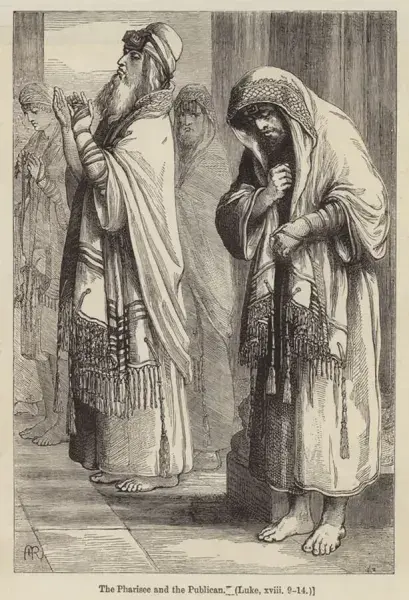
“My strength is made perfect in weakness.”
— 2 Corinthians 12:9
⸻
Synopsis of Tonight's Group on The Ascetical Homilies of St. Isaac the Syrian Homily 8 paragraphs 5-9
There is a humility that we speak about.
And there is a humility that is given.
The first is clean.
Understandable.
Manageable.
The second is devastating.
Saint Isaac does not speak of an idea.
He speaks of a man who has seen something in himself, not once, but repeatedly, until illusion collapses.
“A man who has reached this in truth and not in fancy…”
This is the dividing line.
Most of what we call humility is still fantasy.
A posture.
A tone.
A self-perception.
But true humility is born only when a man has been brought face to face with his own instability, his own powerlessness, his own inability to sustain even the smallest good without God.
Not conceptually.
Existentially.
⸻
This is why Isaac says that everything begins with the recognition of one’s weakness.
Not as an idea.
But as a state of being.
A man comes to see that he cannot hold himself together.
He cannot secure his own heart.
He cannot even pray without distraction, without resistance, without collapse.
And from this recognition, something begins to cry out.
Not beautifully.
Not eloquently.
But desperately.
Out of need.
Out of poverty.
Out of a knowledge that if God does not draw near, he will fall apart.
This is the beginning of real prayer.
Not devotion.
Dependence.
⸻
And yet here is the scandal.
God does not always respond as we expect.
He draws near . . . yes.
But not always by removing the trial.
Not always by granting the request.
Sometimes He withholds.
Not out of indifference,
but out of wisdom.
Because the very delay becomes the means by which the soul is held near Him.
Isaac dares to say that God defers His help
so that the man will not depart.
So that he will remain in prayer.
Remain in need.
Remain in proximity.
This is not cruelty.
It is a love that refuses to let the soul return to self-sufficiency.
⸻
And more troubling still:
God permits temptation.
Not always.
But at times.
The assault comes.
The fire burns.
The instability is exposed again.
And the man cries out:
Why?
Why does God not remove this?
Why does He allow this struggle to continue?
Isaac answers with a severity we would rather avoid:
So that you may learn war.
So that you may be instructed.
So that you may know.
Not in theory,
but in experience;
that without Him, you are nothing.
⸻
This is where humility is forged.
Not in peace.
But in exposure.
Not in success.
But in repeated failure.
Not in clarity.
But in the confusion of being unable to sustain oneself.
The man who does not know this, Isaac says, walks on a razor’s edge.
He may appear stable.
Even virtuous.
But he stands near the lion.
The demon of pride.
Because without the knowledge of one’s weakness, the soul inevitably attributes its stability to itself.
And this is the beginning of the fall.
⸻
Humility cannot be acquired directly.
It cannot be chosen as a virtue.
It must be given through conditions that undo the illusion of strength.
Through delay.
Through struggle.
Through temptation.
Through the repeated discovery that one is not what one thought.
This is why Isaac says that humility is acquired only by humility’s own means.
Which is to say:
By being brought low.
By being shown the truth.
By having the inner architecture of conceit quietly dismantled.
⸻
And here the most piercing word emerges.
Without humility, a man’s work is not perfected.
Even if it appears good.
Even if it appears fruitful.
It does not rise above fear.
It is not sealed by the Spirit.
It remains within the realm of the self.
Unstable.
Vulnerable.
Unfounded.
Because only humility forms the foundation that cannot be shaken.
A city built on humility stands.
A life built on anything else trembles.
⸻
And so we must ask:
What if the very things we are trying to escape,
the delay, the dryness, the temptation, the instability,
are the very means by which God is drawing us near?
What if the unanswered prayer
is the mercy?
What if the struggle that does not cease
is the protection?
What if the exposure of our weakness
is the only way we will ever become real?
⸻
We want relief.
God desires communion.
We want stability.
God gives us Himself.
And He will not allow us to possess Him
as long as we believe we can stand without Him.
⸻
The widow cries out before the unjust judge.
Relentlessly.
Without dignity.
Without restraint.
Because she knows she has no other hope.
Isaac places this image before us for a reason.
This is the posture of the humble man.
Not composed.
Not self-contained.
But persistent.
Needy.
Unashamed.
Because he has seen the truth.
⸻
In the end, humility is not thinking less of oneself.
It is knowing, without illusion,
that one cannot live without God.
And not merely knowing it,
but remaining there.
In prayer.
In need.
In trembling.
Afraid not of punishment,
but of losing the nearness of God.
⸻
This is the paradox.
The man who is weak
becomes unshakable.
Because his life is no longer founded on himself.
But on the One
who draws near
to the broken.


Comments