_edited.jpg)
The One Who Remained
The Beloved Disciple and the Hidden Vocation of Staying

“If it is my will that he remain until I come, what is that to you? Follow me.”
— John 21:22
There is something almost painful in this scene by the sea.
Peter has just heard about the shape of his martyrdom. The Lord has told him that one day his hands will be stretched out and he will be led where he does not wish to go. And almost immediately Peter turns away from the word spoken to him and asks about another.
“Lord, what about this man?”
How deeply human this is.
The moment suffering appears before us, we look sideways.
We want comparison.
Clarification.
Reassurance that our path is not harder than someone else’s.
But Christ cuts through all of it with frightening simplicity:
“What is that to you? Follow me.”
The Desert Fathers would say that salvation begins precisely here: when a man stops measuring his life against the lives of others. Abba Anthony went into the desert not because he understood everything, but because he ceased looking around and began looking toward Christ alone. Comparison is one of the great diseases of the spiritual life because it prevents obedience to the particular cross given to us.
Peter is called to go out.
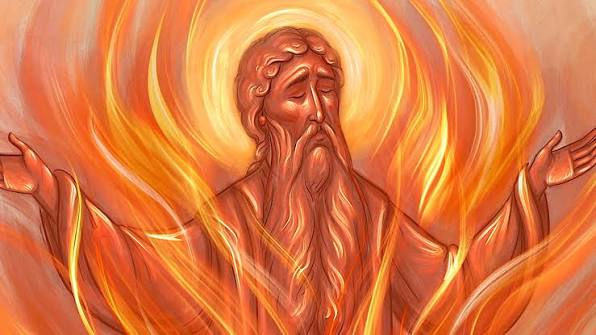
John is called to remain.
Neither chooses his path.
This is important.
The beloved disciple does not seize a vocation. He receives one. And his vocation is strange. Hidden. Misunderstood. Quiet. The Lord does not even fully explain it. He simply says, “If it is my will that he remain…”
Remain where?
The Fathers would say: remain in love.
Remain in the heart.
Remain at the breast of Christ.
Remain beneath the Cross when others flee.
Remain in the tomb when all certainty has collapsed.
Remain after resurrection without demanding explanations.
The beloved disciple is the one who remains.
Not the strongest.
Not the loudest.
Not the most dramatic.
He remains.
In our age this may be the hardest vocation of all.
Everything in us wants movement, reinvention, visibility, definition. We are terrified of hiddenness because hiddenness feels like death to the false self. We want to become someone. We want resolution. We want clarity about our role, our future, our importance. Even spirituality becomes infected with this restlessness. We search constantly for the next thing: the next ministry, the next identity, the next certainty that will save us from the terrible silence of simply being before God.
But the beloved disciple stands before us like a quiet rebuke.
He does not build a platform.
He does not explain himself endlessly.
He does not grasp for prominence.
He remains close.
Modern elders like Saint Sophrony of Essex and Saint Silouan the Athonite spoke often about enduring before God without fleeing the pain of exposure, abandonment, or incompleteness. This remaining is not passive resignation. It is crucifixion of the ego. It is the refusal to escape the place where God has allowed us to stand.
Sometimes remaining means staying beside an aging parent while the soul longs for solitude.
Sometimes it means remaining faithful inside confusion.
Sometimes it means carrying unresolved grief for years without forcing meaning upon it.
Sometimes it means refusing to construct a grand spiritual identity out of one’s wounds.
The beloved disciple teaches us that holiness may look less like conquest and more like fidelity.
Simply staying near Christ long enough for the heart to become quiet.
The modern world does not understand this. Much of religious culture does not understand it either. We admire visible sacrifice, dramatic conversions, public missions. But the Kingdom often grows in hidden endurance known only to God.
John remained at the Cross.
That is the key.
When the others scattered, he stayed near the unbearable thing. The Fathers teach us that the spiritual life matures precisely when we stop fleeing the Cross within our own life. The false self constantly seeks escape from vulnerability, shame, uncertainty, aging, loneliness, hiddenness, failure. But the beloved disciple remains there with Christ.
And because he remains, he becomes capable of witness.
“This is the disciple who is bearing witness…”
True witness does not come from mastering religious ideas. It comes from remaining with Christ through darkness without abandoning Him.
This is why the deepest spiritual words are often spoken by those who have suffered quietly for many years. Their authority is not rhetorical. It is cruciform. Something in them has stayed.
Perhaps this is why these words speak so deeply to many of us now.
So many are exhausted.
Disillusioned.
Spiritually homeless.
Unable to return to old certainties yet unable to construct new ones.
And Christ does not always answer with explanations.
Sometimes He only says:
“Remain.”
Remain in prayer even when prayer feels empty.
Remain in love when the heart feels poor.
Remain in hiddenness when no one sees your life.
Remain beside the wound without turning it into an identity.
Remain near Christ without demanding that He immediately resolve the mystery.
The beloved disciple is not promised exemption from suffering or death. He is simply given a different path: the path of abiding.
And perhaps this is the deeper martyrdom in our age.
Not doing great things.
Not becoming impressive.
Not endlessly speaking.
But remaining faithful in the quiet place where Christ has put us, until He comes.


The interesting thing is that Peter had to die. And John had to die.
One is taken to a place where he does not want to go, and it is not just the foot of the cross: it’s crucifixion. The other is cast into exile, left in isolation, not at the foot of the cross but crucified to the self. Whether physical death or spiritual, the dying is the same. You die alone.
No one can die for us. Even holding the hand of someone who's dying---the consolation is for the living; they don't enter the tomb. The dying are alone with God.
...When Jesus called Zacchaeus down from the tree, He doesn’t ask to stay at his house: He says, “I…