_edited.jpg)
In the Fullness of Time
The Unhurried Rhythm of Divine Providence

There is a rhythm in the divine life that refuses haste. It moves with a serenity that unnerves us because it is free of all compulsion. When the Scriptures speak of Christ coming in the fullness of time, they unveil something that governs every hidden corner of the spiritual life. The eternal Son did not tear the heavens open in a display of irresistible force. He waited until the Father willed it. He waited until Israel’s long ache reached its ripening. He waited until a young girl in Nazareth had been fashioned in silence into a heart spacious enough to hold God. The world was restless, violent, exhausted, yet God did not rush. He waited for the fullness of time.
This divine patience continues in the stillness of Nazareth. Thirty years of obscurity, unnoticed by the world and uncelebrated by history. Thirty years of learning the fragrance of wood and the weight of silence. Thirty years where the eternal Word spoke nothing publicly. No crowds. No miracles. Only the slow ripening of a human life in obedience to the Father. If the Son of God embraced such hiddenness, how can we imagine that our own lives will unfold through anything other than long stretches of quiet preparation. God wastes nothing, and so often He begins by wasting our haste.
The pattern appears again in the desert. Forty days of hunger, solitude, and prayer. The Spirit drives Christ there before a single public act because the kingdom is always born in the places where everything unnecessary is stripped away. There He waits. There He listens. There He becomes the space in which the Father’s will is everything. It is from this furnace of surrender that His mission flows. The desert becomes the gate of clarity, and clarity is never granted to those who demand it or seize it. It is given to those who wait.

And then there are the quiet sentinels of the temple, Simeon and Anna. One ancient in years, one ancient in longing. The Spirit does not reveal when the Messiah will come or how. They are simply told to remain faithful, to continue praying, to stand watch in the shadows of the sanctuary. Their entire lives become an embodied patience, an offering of time itself. They are not trying to accelerate the promise, nor crafting alternate futures when God seems slow. They wait upon the Lord, not as an escape from life, but as the only way into its deepest truth. And when He comes into His temple, their waiting becomes the lens that allows them to recognize Him.
All of these moments speak into the fire of our own desire to control the arc of our lives. We grow anxious when God does not move according to our schedules. We grasp at solutions, try to engineer outcomes, attempt to construct a life that bends toward our fears rather than His providence. We call this prudence or responsibility, but so often it is simply mistrust disguised as virtue. The Scriptures dismantle this illusion. They show us that the most decisive acts of God are woven in the slow loom of waiting, obedience, and surrender.
Waiting is not inactivity. It is not passivity or resignation. It is the posture of one who acknowledges that God alone sees the whole terrain of our life. It is the refusal to force His hand because the heart has learned that whatever arrives before its time is not a gift but a burden. It is the humility that knows private judgment leads us into deserts of our own making, while divine timing leads us into deserts that transform.
To wait upon the Lord is to step into the rhythm of the Incarnation itself. It is to let God shape the circumstances, the people, the interior readiness, and the hidden years we would rather escape. It is to trust that our Nazareth, our wilderness, and our temple are not delays but classrooms. It is to believe that the fullness of time is always arriving, quietly, imperceptibly, beneath the surface of what we can see.
The One who waited to be conceived, who waited to reveal Himself, who waited to begin His ministry, who waited to ascend His Cross, is the same Lord who asks us to walk slowly with Him. He does not need our haste. He desires our fidelity. And in the end, those who wait upon the Lord do not miss their calling. They meet Him precisely in the hour the Father appoints, and their life becomes a temple where the long awaited Light enters and shines.
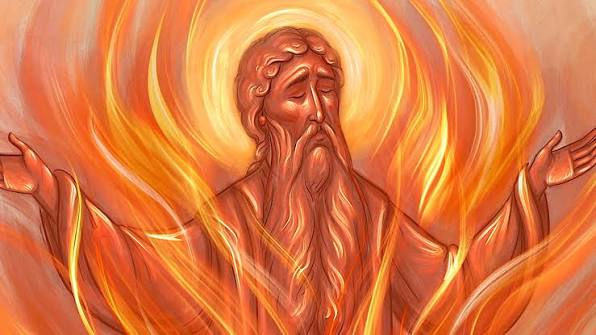
Icons by George Kordis


Comments