_edited.jpg)
I Said It Was Impossible
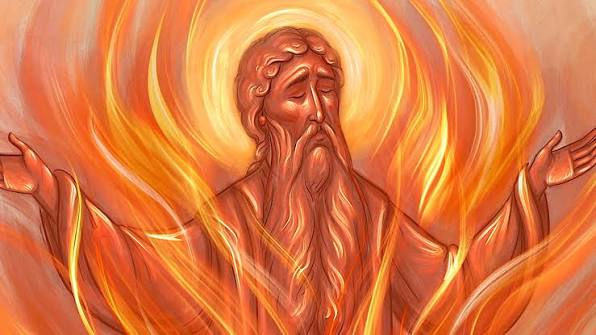
St. Nilus of Sora, Interior Struggle, and the Refusal of Excuses

"If it is by God's will that we are gathered together, then we should be faithful to the traditions of the saints and the holy fathers and to our Lord's commandments, instead of seeking to exempt ourselves by saying that nowadays it is impossible to live according to the Scriptures and the precepts of the fathers."
St. Nilus of Sora
There is a temptation that does not arrive as open rebellion. It comes quietly, clothed in sincerity, even devotion. It begins not with rejection of the Gospel, but with fatigue. A weariness of carrying a vision that does not easily settle into the air of the time. A sense of being inwardly formed by the Fathers while outwardly living in a world that no longer speaks their language.
This is where the struggle first shows itself. Not in denial, but in erosion. The slow suggestion that what once felt clear may have been excessive. That perhaps the Gospel and the Fathers belong to another age. That fidelity now must be gentler, more flexible, less exacting. The words used are careful: prudence, discernment, realism. But beneath them lies a quieter voice saying, it is no longer possible.
St. Nilus of Sora exposes this voice with unsettling directness. If it is by God’s will that we are gathered together, then we should be faithful to the traditions of the saints and the commandments of the Lord. Nilus does not argue with circumstances. He does not weigh psychological complexity. He names the heart of the matter. If God has placed us here, in this time, then excuses are no longer humility. They are unbelief.
This is difficult to hear because the temptation feels reasonable. The world is loud. Life is fragmented. Structures are thin. The cost of fidelity feels high. Yet the Fathers never allowed circumstances to become the measure of truth. They knew exhaustion. They knew discouragement. They knew the temptation to soften the way. They called it akedia—the soul’s refusal to remain under the weight of its calling.
Abba Moses did not say, “Understand your cell.” He said, remain in it. The command was not insight, but endurance. Stay where your weakness is revealed. Stay where prayer feels dry. Stay where the heart can no longer hide behind ideals. This staying is not passivity. It is responsibility.
What makes this struggle especially sharp today is the quiet nihilism that surrounds us. Not the loud denial of God, but the assumption that holiness is no longer realistic. That the tradition is admirable but impractical. That baptism promises more than life can now deliver. This nihilism does not argue. It shrugs. And slowly, it hollows the soul.
St. Paisios the Athonite warned that our greatest danger is not persecution or error, but small faith. We lower the measure of the Gospel so that we will not be judged by it. We call this mercy, but it is fear. Mercy does not erase the Cross. It gives us strength to stand beneath it.
The heart resists this diminishment. It knows when it is being asked merely to cope rather than to be transformed. And so the struggle intensifies: not outwardly, but inwardly. A growing distance between what one knows to be true and what one feels capable of living. The temptation is not to abandon the path, but to redefine it until it no longer demands conversion.
Here the Fathers are unanimous. Do not resolve this tension too quickly. Do not seek relief by reduction. Do not flee into either despair or false peace. Formation often comes through narrowing. Through limits not chosen. Through remaining faithful without clarity about the outcome.
To struggle rightly here is to reclaim responsibility gently but firmly. To continue praying when prayer feels thin. To refuse to treat the Fathers as poetry rather than medicine. To live as though grace were still sufficient. Not heroically. Faithfully.
St. Nilus leaves us with no safe middle ground. Either God has gathered us here, or He has not. Either baptism is real, or it is ceremonial. Either the Gospel is livable now, or the Church is a memory. The Fathers do not ask us to imitate their century. They ask us to stop lying about ours.


Comments