_edited.jpg)
A Dialogue in the Late Hour
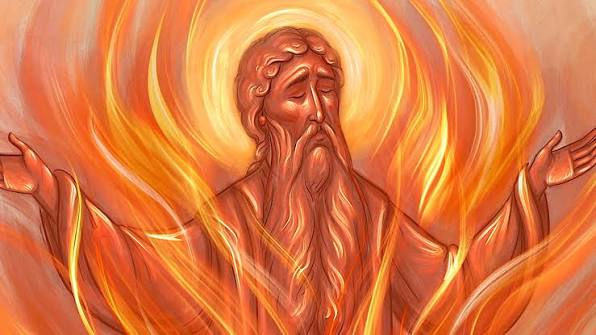
St. Paul of Thebes and a Disciple

“There comes a time when the servant of God no longer lives by what he does,
but by what he is willing to lose.”
— saying attributed to the desert tradition surrounding Paul of Thebes (Feast Jan.15)
Disciple:
Father Paul, the years feel heavy in my bones. What once burned with clarity now feels stripped bare. I have served at the altar for decades, yet I feel as though my name is being taken from me. Not through scandal. Not through failure. But through a quiet, unanswerable summons. As though God were saying, You must serve Me otherwise now.
Paul:
When the years grow heavy, child, it is because the fruit is ripening. Green wood does not feel its own weight. Only the tree that has stood long in sun and wind begins to groan.
Disciple:
I am afraid. I feel like a priest who has received a diagnosis that changes everything. Nothing outward has been taken away, yet inwardly I know I cannot go on as before. The sacrifice I offer no longer feels symbolic. It is my own life being laid down. My future. My ego. The very image by which I knew myself.
Paul:
Then you are learning the deepest liturgy.
When I fled to the desert, I did not flee the world so much as the man I believed myself to be. God did not ask me to do more. He asked me to consent to being consumed more slowly, more completely.
The altar is not only stone. The altar is the heart that finally allows itself to be emptied.
Disciple:
But who am I if I am no longer what I have been? If the role that once gave me shape is dissolving?
Paul:
Who were you when you first heard His voice?
Before the vestment. Before the title. Before the labor hardened into identity. God is not undoing your priesthood. He is purifying it of every false support.
Disciple:
This feels like loss.
Paul:
Only because exposure feels like death to the ego.
Listen carefully now.
The diagnosis you fear is not written in the body but in the heart — every false image of usefulness. And God heals by cutting away what the ego calls vital.
What you are undergoing is not punishment. It is revelation.
Disciple:
Revelation burns.
Paul:
Yes. Because it removes the coverings we mistook for life.
When the future collapses, the present becomes holy ground. When strength recedes, truth advances. You are not being dismissed. You are being consecrated again.
Disciple:
But I can no longer offer what I once did.
Paul:
Exactly.
There comes a season when the priest no longer stands primarily before the people, but before God for them. Hidden. Reduced. Anonymous. Burning quietly like embers beneath ash.
Do you think my cave was an escape? It was an altar that consumed me inch by inch.
Disciple:
So this narrowing is not failure?
Paul:
No. It is mercy.
God narrows the path when the heart is ready to walk without illusions. The world does not need more visible servants. It needs witnesses who have passed through the stripping fire.
Your usefulness is being taken away so that love may remain.
Disciple:
And what remains, when even that is gone?
Paul:
Intercession without words.
Presence without control.
Love without outcome.
A priest who no longer needs to be effective, only faithful.
When you stand at the altar now, it is Christ who offers you with the bread and wine. The sacrifice has moved inward, where no one sees and no one measures.
This is the priesthood of the late afternoon, when the light grows softer and truer, and shadows lengthen without fear.
Disciple:
And if I am afraid?
Paul:
Then stay.
Fear is only the ego realizing it will not survive the offering. Let it tremble. Let it be laid down slowly. God is not finished with you. He is finally being obeyed without resistance.
Blessed is the priest who learns, before death, how to disappear into God.
Remain here a while.
The desert still knows your name — even if you are learning to let it go.


Comments