_edited.jpg)
When Independence Becomes Exile
On the Hidden Pride That Separates the Heart from the Will of God
“I seek not mine own will, but the will of the Father which hath sent me.”
John 5:30
⸻
There is a kind of independence that the world worships and the saints fear.
The world calls it maturity. Strength. Self possession. Identity.
The fathers call it death.
Not the death of the body but the death of the heart.
Because independence, when clung to as a possession, separates man from the very source of his life.
Archimandrite Zacharias speaks with surgical precision. He exposes something that most men will never see because they are too busy defending it. The will. Our will. Our reasoning. Our judgments. Our preferences. Our need to determine our own path. Our insistence that we know.
This is the fortress of the fallen man.
And it does not feel like a prison.
It feels like safety.
This is the calamity.
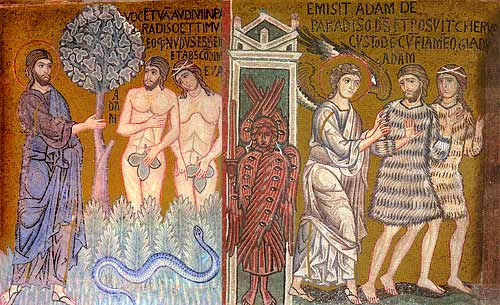
Adam fell not because he committed a crime in the legal sense but because he chose independence. He chose to stand apart from God and determine reality on his own terms. He chose his own will over communion. And the moment he did, death entered him. Not merely biological death but existential isolation.
“I will ascend,” said Lucifer. “I will exalt my throne.”
Isaiah 14:13
This is the voice of independence.
It still speaks within us.
Not in dramatic declarations but in subtle resistance. In hesitation. In interior refusal. In the quiet preservation of a private space within the heart that we do not surrender to God or to anyone else.
Abba Poemen said, “A man may seem to be silent, but if his heart condemns others, he is babbling ceaselessly.”
The independent man is never truly silent because he is always inwardly asserting himself.
He is always measuring.
Always evaluating.
Always protecting the sovereignty of his own mind.
And because of this, he cannot receive God.
Saint Sophrony writes that God creates from nothing. This is not poetry. It is revelation.
God does not create from something that already asserts itself.
He creates from nothing.
And this is why the saints labored to become nothing.
Not because they hated themselves but because they understood a terrifying truth. As long as something in them insisted on existing apart from God, God would not violate their freedom.
Independence is honored by God.
And it is the very thing that prevents union with Him.
Christ reveals the opposite path.
“The Son can do nothing of Himself.”
John 5:19
This is not weakness.
This is divinity.
The Son lives in perfect obedience to the Father not because He lacks identity but because His identity is communion. His will is not erased but fulfilled in love.
This is the paradox Zacharias describes.
When a man dies to his will, he does not become less. He becomes capable of God.
But this death feels like annihilation.
Because everything in us resists it.
The mind resists. It wants to understand before it obeys.
The ego resists. It wants to preserve its dignity.
The heart resists. It fears losing control.
And so we obey partially.
We obey selectively.
We obey when it aligns with our reasoning.
But Zacharias exposes the truth. Partial obedience is still independence.
It is still the preservation of self.
It is still exile.
Abba Dorotheos said, “There is nothing more harmful than following one’s own will, and nothing more beneficial than renouncing it.”
Nothing more harmful.
Not sin in its obvious forms. Not external failures. But the quiet insistence on oneself.
Because this is the root.
This is why many pray and do not change.
This is why many fast and remain unchanged.
This is why many live religious lives and never encounter God.
They have never surrendered their will.
They have only refined it.
Saint Silouan the Athonite discovered the narrow gate when Christ revealed to him, “Keep thy mind in hell and despair not.”
This was not merely about humility.
It was about the destruction of self reliance.
It was about the end of independence.
And when he accepted this word, his heart expanded to contain the whole world.
Zacharias says that when a man makes his will one with God, he begins to pray for all without exception.
This is the sign.
Not visions.
Not emotions.
Not knowledge.
But the disappearance of separation.
The independent man cannot love universally because he still exists at the center of his world.
The obedient man disappears.
And in disappearing, he becomes vast.
He becomes capable of carrying others.
He becomes capable of God.
This is why Christ says, “Whosoever will lose his life for my sake shall find it.”
Matthew 16:25
Not improve it.
Not refine it.
Lose it.
The tragedy is that most men never do.
They preserve themselves carefully.
They remain intact.
They remain sovereign.
And they remain alone.
But the man who dares to become nothing, who surrenders his will without defense, who stops trusting his reasoning more than God, enters into a freedom the world cannot understand.
He no longer needs to protect himself.
He no longer needs to assert himself.
He no longer needs to exist apart from God.
He has come home.
And in losing his will,
he has found his life.
⸻
Reflection based upon the writing of Archimandrite Zacharias Zacharou
The Wondrous and Paradoxical Ethos of Monasticism pp. 149-150


Comments