_edited.jpg)
The Wound That Reveals God
On Faith That Enters, Not Observes

“Put your finger here, and see My hands; and put out your hand, and place it in My side. Do not be unbelieving, but believing.”
John 20:27
⸻
There is something almost unbearable in the moment when Thomas stands before Christ.
The others have seen.
They have rejoiced.
They have believed.
But Thomas does not stand at a distance with them. He does not accept their word. He does not borrow their faith. He speaks with a kind of severity that borders on scandal.
Unless I place my hand into His wounds, I will not believe.
We often hear this as doubt. And it is doubt. But it is not the shallow doubt of indifference. It is not the doubt of someone who does not care. It is the cry of a man who has been shattered.
Thomas had given everything.
He had followed Christ.
He had hoped in Him.
And then he watched Him die.
Not metaphorically. Not spiritually.
He watched Him be broken, humiliated, pierced.
And something in Thomas refuses to move past that. He will not accept a resurrection that does not pass through the wound. He will not accept a victory that ignores the crucifixion.
And so Christ comes to him.
Not with an argument.
Not with a rebuke.
Not with a demand for blind faith.
He comes with His wounds.
He does not erase them.
He does not hide them.
He does not glorify Himself apart from them.
He shows them.
And more than this, He invites Thomas into them.
Put your hand here.
This is the scandal of the Gospel. The Risen Christ is not without wounds. The glory of God is not separate from suffering. The resurrection does not cancel the crucifixion. It reveals its meaning.
Thomas is not asked to believe in an idea.
He is asked to enter a reality.
To place his hand into the very place where death had seemed to triumph.
And there, in that wound, he encounters Life.
My Lord and my God.
This is the first time in the Gospel that someone speaks so directly. Not teacher. Not prophet. Not messiah.
My Lord and my God.
And it comes not from seeing the miracles.
Not from hearing the teaching.
But from touching the wound.
We must understand what this means for us.
We often seek a God without wounds.
A God who resolves our problems.
A God who explains suffering.
A God who restores control.
But the Christ who stands before us offers something else.
He offers His wounds.
And He invites us not simply to look at them, but to enter them.
This is where faith begins.
Not in clarity.
Not in control.
Not in emotional certainty.
But in the place where we bring our hand into what we do not understand. Into what has broken us. Into what we would rather avoid.
And there, if we remain, we discover something that cannot be discovered anywhere else.
That God is present precisely there.
Thomas becomes the apostle not because his doubt was erased, but because his doubt was brought into contact with the wounded Christ.
And so it must be with us.
We cannot remain outside.
We cannot build a faith that stays at a distance.
We cannot speak about God while avoiding the places where we have suffered, where we have been pierced, where we feel abandoned.
Christ stands before us and says the same words.
Put your hand here.
Not only into His wounds, but into your own, now united to His.
Because it is there that the deepest confession is born.
Not from theory.
Not from comfort.
But from encounter.
My Lord and my God.
And then Christ speaks a word for all generations.
Blessed are those who have not seen and yet believe.
This is not a lesser blessing. It is not second place.
It is the blessing of those who must enter the wound without the visible Christ before them. Those who must trust that the hidden presence of God is real even when it is not felt, not seen, not proven.
It is the blessing of those who remain.
Who do not flee suffering.
Who do not numb themselves.
Who do not construct illusions.
But who, in the silence, in the confusion, in the wound, dare to say:
You are here.
This is our path.
Not to avoid the wound.
Not to explain it away.
But to enter it with Christ.
And there, to discover that the wound itself has become the place of communion.
The place where God is known.
The place where faith becomes real.
The place where, with Thomas, we fall to our knees and say:
My Lord and my God.
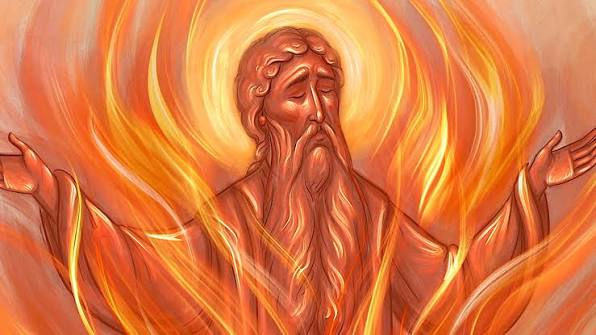


When the wound itself is obscured, when we can't see where the bleeding mess is coming from, perhaps we pray for Light to see the wound. Not so we can explain the wound away, but so we can enter it with Christ. How do we see it without being too self-focused?