_edited.jpg)
The Hidden Life That Remains
Silence, fasting, and vigil as the interior fruit of the Resurrection and the fire of Pentecost

“Acquire the Spirit of peace, and a thousand souls around you will be saved.”
St. Seraphim of Sarov
⸻
There is a solitude that is chosen and there is a solitude that is given.
The first arises from inclination, from temperament, from fatigue with the world or from a hidden refusal of its demands. It may appear noble. It may even resemble the life of prayer. But it cannot endure. When tested it either collapses into restlessness or becomes a subtle enclosure of the self.
The second is born of Christ.
After the Resurrection the disciples do not rush outward. They gather. They remain behind closed doors. Something within them has been undone and cannot be restored by explanation or activity. The One whom they followed has passed through death and now stands among them in a way that cannot be grasped by the mind. He does not stir them into movement. He breathes peace into them.
This is the beginning of another life.
The Resurrection loosens the grip of the visible world upon the heart. What once compelled begins to fall silent. Attachments are not violently stripped away. They simply lose their necessity. The tomb is empty and the soul begins to perceive that it has been living among things that cannot give life.
For some, this awakening does not lead outward but inward.
There arises a quiet and persistent drawing toward stillness. Not as escape but as recognition. Something real is encountered there. Something that does not impose itself yet cannot be ignored.
Pentecost does not interrupt this movement. It fulfills it.
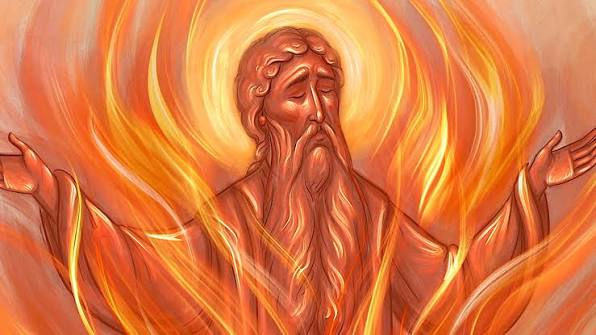
The Spirit does not come merely to send the apostles into the world. He first descends to dwell within them. He fills them. He becomes their life. The fire of Pentecost is not agitation but presence. It gathers the scattered fragments of the heart and draws them into a single attention before God.
For the one called to solitude, this indwelling becomes decisive.
Silence is no longer empty space. It becomes the only place where this presence can be received without distortion. Words begin to feel excessive. Activity feels external. Even spiritual effort can feel like interference.
There is no rejection of the world here. There is no judgment of others. There is simply a growing incapacity to live from anything but this hidden communion.
This desire for solitude is not sustained by discipline alone. Nor by fervor. Nor by the sweetness that may accompany the beginning.
It is sustained by knowledge.
The knowledge born of contact. The soul has tasted something of God and cannot forget. Even when that taste is withdrawn, even when dryness sets in and silence becomes barren, something deeper remains. The heart has been marked.
This is where the life deepens and where it is tested.
For the same grace that draws the soul into silence also begins to transfigure the whole of life.
Fasting is no longer merely an ascetical practice. It becomes a quiet guarding of the heart. The soul has begun to taste something more subtle than food and more necessary than comfort. It no longer seeks to fill itself in the same way. Simplicity begins to feel like clarity. Excess becomes burdensome.
There is less calculation. Less self-measuring. More listening.
One does not fast in order to become spiritual. One fasts because one has begun to live from another source.
The same transformation takes place in vigils.
At first one keeps vigil. Later one is kept in vigil.
The night becomes a place of encounter. The world recedes. The noise diminishes. The heart is more easily gathered. There is a stillness that allows one to stand before God without distraction.
Yet this too is purified.
There are nights when prayer is dry. When the body is heavy. When nothing is given. If the vigil is sustained by experience, it will falter. If it is sustained by love, it will remain.
Then the vigil is no longer an effort to feel near to God. It becomes a simple refusal to leave Him.
This is the hidden integration of the ascetical life.
Fasting, vigils, and silence are no longer separate practices. They become a single movement of the heart. A life that is being drawn inward and held there by the Spirit.
The fathers speak of this as the passage from desire to being.
The soul no longer seeks silence. It abides in it.
It no longer seeks God as an object of experience. It remains before Him as presence before Presence.
This is the fruit of the Resurrection.
This is the fire of Pentecost hidden in the heart.
A life that appears empty from the outside yet is full. A heart that has withdrawn from multiplicity not out of fear but out of love. A stillness that is not absence but communion.
In time one discovers what cannot be taught.
You are not alone there.
The Risen Christ stands there as He stood among the disciples. The Spirit breathes there as He breathed upon them. Nothing dramatic occurs. Nothing needs to occur. The soul rests in a reality deeper than movement and more enduring than any experience.
And so it becomes simple.
The soul desires to be with God.
It eats lightly, that it may remain attentive.
It keeps watch, that it may not lose Him in forgetfulness.
It guards silence, that it may hear Him when He comes.
Not as effort.
But as life.
And in that hidden life, unseen and often unknown, the Resurrection continues and Pentecost does not cease.

...Lord, help me to remain in the stillness...