_edited.jpg)
The Heart That Becomes a Book of Fire
St. Isaac the Syrian on Asceticism, the Death of the Ego, and the Spirit Who Teaches from Within

Synopsis of Tonight’s Group on The Ascetical Homilies of St. Isaac the Syrian Homily 6: 19-20
Here Isaac is not giving us a technique for moral improvement. He is unveiling an icon.
Behind his austere language of toil and Scripture and withdrawal stands a single, luminous vision: the human heart being slowly remade into the dwelling place of God. Asceticism is not a set of behaviors aimed at self mastery. It is the patient clearing of space so that the Trinity may come to rest within us. Everything Isaac names flows from this one mystery.
He begins with what looks like a chain of practices. Bodily toil guards purity. Scripture sustains the toil. Hope and fear steady the soul. Prayer and withdrawal from men protect the heart. But Isaac is not describing a ladder that climbs upward by human effort. He is describing how the soul is held open until it can be seized by the Spirit. These disciplines do not save. They keep us available for salvation. They prevent the heart from sealing itself against grace.
This is why Isaac speaks so soberly about the Scriptures. Until the Comforter has come and taken up His dwelling in the depths of the person we need the written word to keep us from drifting into forgetfulness and fantasy. The Scriptures are not information. They are a form of remembrance. They press the shape of Christ into the memory of the heart so that when our mind is scattered and the passions begin to speak their lies we are not carried away from our true homeland.
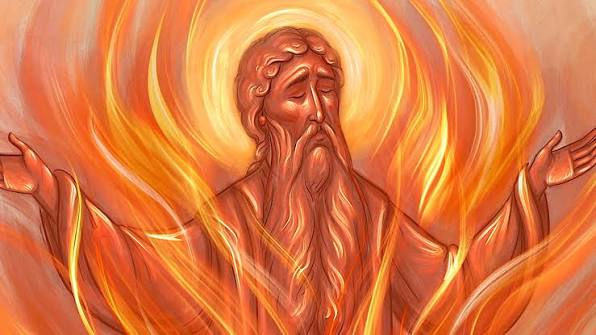
But Isaac also knows that even Scripture is provisional. There comes a moment when the teaching no longer comes from without but from within. When the Spirit penetrates the noetic powers of the soul the heart itself becomes the book. The same Word who once spoke in letters now speaks in fire. This is not a rejection of Scripture but its fulfillment. The written Gospel gives way to the living Christ engraved upon the heart.
Here we touch the heart of Eastern Christian mysticism. Salvation is not merely a verdict. It is a transformation of perception. The center of knowing shifts. The ego no longer stands as the interpreter of reality. The Spirit becomes the teacher. And because this teaching comes from God Himself it is not lost. It does not evaporate under distraction or suffering. It remains as a living memory of communion.
Isaac then strikes at something that terrifies the ego. He distinguishes between good thoughts and a good heart. We are accustomed to judging ourselves by the surface weather of the mind. We watch our thoughts rise and fall like waves and imagine that our worth before God is decided by their movement. Isaac says this is an illusion. Thoughts come and go like sea winds. They stir the waters but they do not constitute the depths.
The heart is the foundation. It is the place where we truly consent or refuse. A person may be flooded with thoughts and yet remain rooted in God. Another may have refined ideas and yet be inwardly turned toward self. What matters is not the agitation of the surface but the direction of the ground beneath it.
This is a devastating word for the controlling ego. We want to manage our thoughts. We want to produce holiness by technique. We want to ensure our standing before God by monitoring every inner movement. Isaac tells us that this entire project is misguided. If judgment were passed on every thought we would be condemned and justified a thousand times a day. That is not how God sees us. God looks at the heart. He looks at where we have placed our deepest trust.
And here the abyss opens.
To let go of the ego is not to become passive or vague. It is to cease making ourselves the measure of reality. It is to fall into the love of God without conditions. The heart that consents to this fall becomes a foundation of peace even while the mind continues to be stirred by many winds. This is why the saints can live in such freedom. They are no longer organized around self protection. They have entrusted themselves to the Paschal mystery.
For Isaac all of this is Christological. The Spirit who teaches the heart is the Spirit poured out by the crucified and risen Lord. The abyss into which we fall is the same abyss into which Christ descended in His self emptying love. To enter this path is to be drawn into the very life of the Trinity. We are no longer managing ourselves toward virtue. We are being re created from within by divine love.
This is the beauty of the ascetical mystical tradition of the East. It does not offer self improvement. It offers transfiguration. It does not promise control. It invites surrender. It does not measure us by the turbulence of our thoughts but by the quiet yes of the heart.
Isaac shows us a humanity that has learned to rest in God even while the winds still blow. A humanity no longer driven by fear or fantasy but grounded in the living presence of the Spirit. This is what we have become in Christ. And this is what the desert still calls us to be.


Comments