_edited.jpg)
The Earthquake of the Name
On the Crucifixion of Eros and the Violent Birth of Pure Desire

“My eros is crucified.”
— Saint Ignatius of Antioch
⸻
There is a moment when the Name of Jesus stops being a prayer you say and becomes a force that breaks you open.
Not gently.
Not therapeutically.
But like an earthquake that splits the ground beneath the life you built in order to expose the bedrock of who you really are.
Before that moment, you pray because you are religious.
After that moment, you pray because you have been seized.
This is what Archimandrite Zacharias Zacharou is describing when he speaks of the monk falling in love with the Name. Not a sentimental love. Not a devotional affection. But an eros so violent and so pure that it kills every other desire by outshining it.
The Name does not coexist with rival loves.
It burns them.
And that is why obedience is first.
We like to imagine that prayer produces obedience. Zacharou says the opposite. Obedience produces prayer. Because obedience is where the self finally stops negotiating. Where the ego finally stops managing outcomes. Where the monk hands over not only his sins but his preferences, his opinions, his imagined futures, his right to curate his own holiness.
Obedience is where eros is nailed to wood.
That is why it hurts.
Not because God is cruel, but because desire is being purified down to a single flame. All the scattered hungers that once fed on approval, on usefulness, on productivity, on spiritual identity, on being needed, on being seen, on being good, are slowly starved. And as they die, something terrifying happens.
You begin to want only God.
Not God plus a life.
Not God plus a role.
Not God plus a ministry.
Not God plus an audience.
Just God.
And when that happens, the Name starts to cling to the breath. The monk no longer prays Jesus. He breathes Him. The chest fills with a heat that does not cool. A sweet pain that does not fade. A wound that never closes because it is not a wound of loss but of possession.
You are marked.
This is why Zacharou speaks so starkly about neglect. Because once the heart has been touched by the Name, there is no neutral ground. Either the fire is tended through obedience and prayer or it begins to suffocate under the ashes of distraction, self reliance, and spiritual compromise. Pseudo supports creep in. Productivity. Validation. Religious noise. Cleverness. Even service.
And slowly the inner man dries out.
This is what it feels like to be alive outwardly and dead inwardly.
But when the Name is guarded, when obedience remains radical, when prayer is kept in tears and longing, something extraordinary happens. The heart becomes a vessel. Not a metaphorical one but a real dwelling. The Name moves in. The law of grace takes over. The monk becomes allergic to anything that would grieve that Presence.
Thoughts no longer dominate.
Passions no longer rule.
The heart becomes a radar for God.
This is what Saint John Climacus meant when he said the monk breathes only the word of his Elder and the Name of the Lord. It is not psychological dependency. It is singleness. One axis. One orientation. One fire.
And this is what Saint Silouan the Athonite knew when he said hesychasm is not isolation but uninterrupted abiding in God. When the heart is soaked in divine sensation, temptation becomes light and thoughts bounce off like sparks against stone.
You do not fight.
You glow.
But none of this happens without crucifixion.
Unless eros is crucified, it remains selfish.
Unless desire is nailed, it remains divided.
Unless love is stripped of all its conditions, it remains impure.
“My eros is crucified,” said Saint Ignatius of Antioch as he went to be eaten by beasts. That was not poetry. That was a diagnosis. When eros is crucified, it becomes absolute. It becomes capable of God.
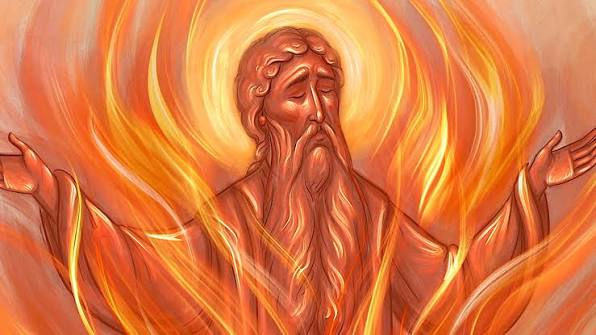
This is the furnace Zacharou speaks of. When the monk leaves his cell, he should feel drunk with sweetness, as though he has been standing inside a fire with his Beloved. That is personal Pentecost. Not tongues. Not ecstasies. But the steady burning of a heart that has become an altar.
The monk becomes all prayer.
All heart.
All Name.
This is what the earthquake is for.
Not to destroy you.
But to remove everything that is not Jesus.
And when the dust settles, you discover that the only thing left standing is the One you love.
And the One who loves you back.
⸻
Reflection on the writings of
Archimandrite Zacharias Zacharou
The Wondrous and Paradoxical Ethos of the Monk, po 110-113


Comments