_edited.jpg)
Wounded in the Face
When God Destroys the Image You Defend

“If something should befall you in this great war and you should even be wounded upon your face… persevere.”
— St. Isaac the Syrian, Homily 9
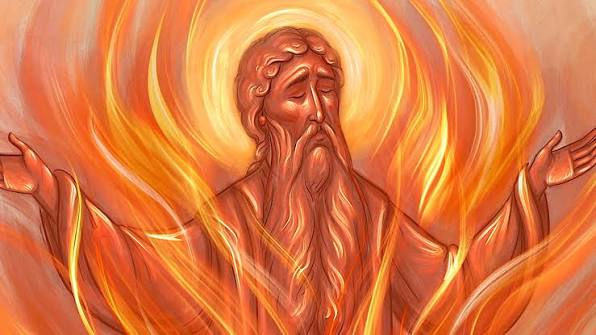
St. Isaac is not speaking first about visible failure. He is speaking about the kind of wounding that exposes a man.
A wound upon the face cannot be hidden.
It is public. It is humiliating. It destroys the image one presents to others. It removes dignity as the world understands it.
In the spiritual life this face is the image of the self.
The religious self lives by a face. It must appear composed, prayerful, advancing, faithful. Even in struggle it wants to appear as one who struggles well.
But in the true war God allows blows that strike directly at this.
You are seen in your weakness. Your instability is exposed. Your thoughts betray you. Your prayer collapses. Your efforts do not bear fruit. Others may see you differently. You see yourself differently.
The face is wounded.
This is why the phrase is so sharp. It is not merely suffering. It is the loss of how you are seen and how you see yourself.
Most cannot endure this.
They turn back quietly and begin to heal the face. Not the heart. The image.
They gather themselves again. They become measured. They speak carefully. They construct a version of themselves that can stand before others and before their own mind.
They prefer an unwounded appearance to a pierced heart.
Isaac says do not do this.
If you are struck in this way, do not retreat. Do not cover it. Do not seek to restore the image.
Persevere.
Why
Because this is the war.
The war is not simply against sin in its crude forms. It is against the subtle life of the ego that seeks to preserve itself even in holiness.
To be wounded upon the face is to have that self exposed and broken.
And to remain in that state without rebuilding is to become steadfast and unmoving.
Not because you are strong, but because you have nothing left to defend.
The blood he speaks of is not dramatic language. It is the cost of this exposure. The shame. The confusion. The sense of failure. The loss of inner coherence.
All of this feels like death.
And in a sense it is.
This is where it ties directly to the dismantling of the religious self.
Because the deepest layer of that self is not destroyed by effort or discipline. It is undone by being seen through.
Wounded in the place it tried most to protect.
If you endure this without turning away, something shifts.
You stop trying to appear before God.
You begin to stand before Him.
Without face. Without defense. Without narrative.
And this is what Isaac calls most desirable and praiseworthy.
Not because it is clean or beautiful, but because it is true.
A man who remains in the war after being exposed is no longer fighting for himself.
He has already lost himself.
And only then can he begin to belong to God.


Comments