_edited.jpg)
When God Breaks the Ground Beneath the Monk
The Earthquake That Makes a Man an Image of Pentecost

“Our God is a consuming fire.”
Hebrews 12:29
⸻
There comes a moment in the life of the monk when God no longer allows him to remain who he has been. The ground beneath his heart begins to break open. Not in feeling. Not in imagination. But in being. The spiritual earthquake begins and nothing that was built for survival can stand.
This earthquake is not consolation. It is the reordering of reality. It is the collapse of the inner world the monk constructed in order to live without God at the center. When God takes hold of a man He does not adjust him. He undoes him.
Saint Sophrony says that when this began in him everything fell apart. His former way of life dissolved. His old relationships lost their hold. His manner of thinking was overturned. The world he had known no longer existed. This is what happens when God enters the center. Everything else is displaced.
The monk becomes a stranger in the world not because he despises creation but because he no longer belongs to it. What men call success he sees as dust. What they call security he knows as captivity. What they call life he recognizes as death. He appears mad because he has crossed into another order of being.
The monk is drunk with a wine the world cannot taste. He has been seized by the Holy Spirit and nothing remains neutral.
This is why divine providence is fearful. When a man places himself into the hands of the living God nothing remains hidden. Every unclean attachment is exposed. Every secret love of comfort is revealed. Every compromise with the world is brought to light. Not to shame him but to burn him clean.
The monk is tested until the scales of corruption fall from his heart. He must remain in the earthquake until nothing remains that belongs to the old man. This is repentance. Not regret. Not remorse. But the endurance of being dismantled by God.
The life of the monk moves between two fires. The apophatic fire of Lent that strips him. The fasting. The dying. The renunciation. The crucifixion of the mind. The destruction of self will. The humiliation that leaves him with nothing. This is the descent into death where the old man is buried.
And the cataphatic fire of Pentecost that draws him. The longing. The thirst. The hunger for God. The burning desire for union. The hope that lifts him beyond the grave. This is the ascent of the new man toward the promise of the Father.
Without the apophatic he would fall into pride. Without the cataphatic he would fall into despair. God binds the two together so that the monk may be crucified and raised at the same time.
The goal of monastic life is not improvement. It is not healing. It is not spiritual maturity. It is resurrection.
To become an image of Pentecost the monk must be shattered by repentance and ignited by desire. The Name of Jesus must burn in his mind. The word of God must kindle fire in his heart. Obedience must destroy his will. Longing must consume what remains.
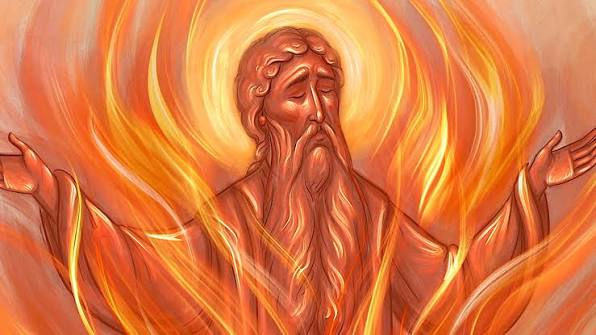
When nothing stands between the monk and God the Holy Spirit descends as fire.
Then the man becomes flame.
Not by discipline.
Not by effort.
But because nothing in him resists love.
To be all flame is to be homeless in this world. To belong nowhere but God. To be misunderstood. To be emptied. To be free.
This is the narrow way.
This is Great Lent.
This is Pentecost.
⸻
A Reflection Based upon the Writings of Archimandrite Zacharias Zacharou
The Wondrous and Paradoxical Ethos of Monasticism pp. 105-110


Comments