_edited.jpg)
The Stone That Is Not There
Running Toward the Empty Tomb When the Heart Says It Is Too Late

“Why do you seek the living among the dead? He is not here, but has risen.”
Luke 24:5
⸻
Mary comes to the tomb while it is still dark.
She comes not because she expects resurrection, but because love does not calculate. Love goes even when there is no reason left to go. The stone has been sealed. Death has spoken its final word. The body is gone from her life. Still she comes.
This is the first movement of the resurrection. Not light. Not understanding. Not certainty. But love that refuses to stay away, even when everything in us says there is nothing left.
The fathers tell us that this is already faith. Not the faith that sees, but the faith that moves. The faith that walks in darkness toward God without explanation.
And what does she find?
The stone is already removed.
Before she understands. Before she believes. Before she can even name what has happened. The obstacle is gone.
So too with us. We spend our lives standing before stones that we believe cannot be moved. The stone of sin. The stone of shame. The stone of what we have done and what we have failed to do. The stone of words spoken and wounds inflicted. The stone of denial.
We stand before these stones and say quietly to ourselves: this is the end of me.
But the Gospel reveals something terrifying and consoling at once.
The stone is not moved by you.
It has already been moved.
Before your repentance is pure. Before your prayer is steady. Before your mind is clear. Before your heart is free. The stone is gone.
And yet, we do not believe it.
We live as though the tomb is still sealed.
We return again and again to the same thoughts. The same accusations. The same inward voice that tells us that we are finished. That we are unworthy. That God is absent.
Saint Isaac says that a man who has come to know his weakness presses toward God with greater boldness, not less. But we do the opposite. We discover our weakness and withdraw. We discover our sin and hide. We discover our shame and we seal the tomb again with our own hands.
We become guardians of a grave that Christ has already emptied.
Peter runs.
But not like John.
John runs with the swiftness of love. He has remained close. He has leaned on the breast of the Lord. His heart recognizes something even before his mind can grasp it. Love moves quickly when it is summoned.
Peter runs with a heavy tread.
He carries something.
Three times he denied. Three times he said, I do not know Him. And now every step toward the tomb is weighted with memory. With regret. With the knowledge of what he has done.
And yet he runs.
This is the second movement of the resurrection. Not purity. Not freedom from the past. But the courage to run toward Christ even while carrying everything that condemns you.
Peter does not wait until he feels worthy. He does not pause to repair himself. He does not say, I will go when I am ready.
He runs as he is.
Saint Sophrony tells us that the one who truly knows himself stands before God without justification and without despair. This is the narrow path. Not excusing ourselves. Not condemning ourselves. But standing in truth and still moving toward Him.

Peter enters the tomb.
He sees the burial cloths. The place of death is no longer a place of decay but a place of order. Of peace. Of absence that is not loss but presence hidden.
Then John enters.
And he saw and believed.
What did he see?
Nothing.
No body. No proof. No explanation.
Only emptiness.
This is the third movement of the resurrection. Faith born not from evidence, but from encounter. The kind of seeing that is not with the eyes but with the heart.
The empty tomb is the most profound witness because it refuses to satisfy the mind. It demands something deeper.
It demands that we let go of the story we have told ourselves about death, about sin, about ourselves.
Many Christians live as though they are already damned.
Not in words. Not in doctrine. But in the quiet place of the heart. They approach God as though He is still behind a stone. As though His mercy is limited. As though their sin is greater than His resurrection.
They believe their thoughts more than the Gospel.
They believe their shame more than the Cross.
They believe the weight of their past more than the power of His rising.
Saint Silouan says that the soul must learn to keep the mind in hell and despair not. But we have learned something else. We keep the mind in our guilt and we do despair.
We have not yet understood the resurrection.
The stone was not moved so that Christ could come out.
He was already risen.
The stone was moved so that you could see.
So that you would stop standing outside your own tomb, weeping over what no longer holds you.
So that you would enter.
So that you would see that death does not have what it claims to have.
So that you would discover that the place you feared is empty.
This is the scandal of Pascha.
Not that Christ is risen.
But that you are not bound.
Not that death is defeated in some distant way.
But that the very thing you cling to as your identity, your failure, your shame, your history, has no power to contain you any longer.
And yet we linger outside.
We return to the darkness.
We speak to ourselves as though the resurrection has not happened.
The fathers would say this is not humility. It is unbelief.
True humility does not say, I am too sinful for God.
True humility says, I am nothing, and yet He has come for me.
Today the Church does not invite you to feel something.
She commands you to enter.
To run like John. Or to run like Peter. It does not matter. Only run.
To come in the darkness if you must. Like Mary. It does not matter. Only come.
But do not remain outside your own salvation.
Do not stand before a stone that is no longer there.
Do not guard a grave that has been emptied.
Enter.
Look.
And begin, even if only in trembling, to believe.

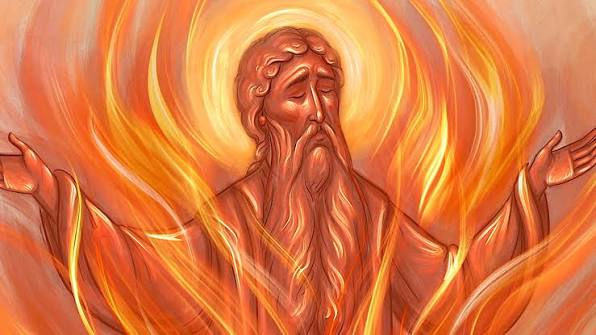


...The stone was moved so that you could see….