_edited.jpg)
The Hidden Monastery of the Heart
Hesychasm as the Fulfillment of Baptism in Every Life

“Enter eagerly into the treasure house that is within you, and so you will see the treasure house of heaven.”
— St. Isaac the Syrian
⸻
There is a subtle lie that has crept into the life of the Church.
It whispers that the deep things of God belong to others.
To monks.
To those who have left.
To those who live somewhere else.
And so the Christian in the world consoles himself with fragments. A prayer here. A moment there. A moral effort stretched thin across a distracted life. He believes in holiness, but as something distant. Something reserved.
But the Fathers do not speak this way.
They speak as men who have seen the heart. And once the heart is seen, everything changes.
⸻
Hesychasm is not a location.
It is not Mount Athos.
It is not the desert.
It is not the cloister.
It is the uncovering of what was given in Baptism.
St. Gregory Palamas does not present hesychasm as an achievement, but as a revelation. The nous descending into the heart. The mind no longer scattered across a thousand images, but gathered, unified, made whole in God.
And this is not foreign to the baptized life.
It is the baptized life.
Because in Baptism, something irrevocable happens.
You are not simply forgiven.
You are not simply cleansed.
You are united to Christ.
His life becomes your life.
But here is the tragedy.
Most never live from this.
The grace remains like a buried fire. Real. Present. But covered over by noise, distraction, fear, and the constant construction of a self apart from God.
⸻
The Jesus Prayer is not a technique.
It is not a method among many.
It is the cry of the baptized heart remembering itself.
“Lord Jesus Christ, Son of God, have mercy on me.”
This is not repetition. It is return.
St. John Cassian speaks of the single verse repeated until it becomes one with the breath, one with the soul. Not because God needs to hear it again, but because we have forgotten how to remain.
St. Theophan the Recluse says that the prayer must descend from the lips to the mind, and from the mind into the heart. And there it begins to pray itself.
This is the moment everything changes.
Because prayer is no longer something you do.
It becomes something that lives within you.
⸻
The modern elders speak with a kind of quiet urgency about this.
St. Sophrony tells us that true prayer is hypostatic. It involves the whole person. It is not an activity added to life, but the very mode of existence of the person in Christ.
Archimandrite Zacharias warns us not to grasp even at prayer. Not to turn it into possession. Because the Spirit does not remain where He is controlled.
And so the way becomes very simple.
You begin.
Not as an expert.
Not as one worthy.
But as one who consents.
You take the prayer upon your lips.
You bring it back when your mind wanders.
You do not measure progress.
You do not seek experiences.
You remain.
⸻
Here is where the lie is exposed.
The world says you cannot live this way in the midst of ordinary life.
The Fathers say the opposite.
They say the battlefield is the heart. And wherever you are, there you are.
A mother caring for a child in the middle of the night can enter deeper into hesychia than a monk distracted in his cell.
A man working in silence, calling upon the Name, can become a dwelling place of God.
An elderly woman sitting in her chair, repeating the prayer with tears, may be living in unceasing communion.
Because hesychasm is not the absence of activity.
It is the presence of God within it.
⸻
But this path is not romantic.
It will strip you.
You will see the chaos within.
You will see how fragmented the mind is.
How quickly it flees silence.
How resistant the heart is to surrender.
St. Isaac says that the one who has seen his sin is greater than one who raises the dead.
Because to remain in the truth of oneself before God without fleeing is already a miracle.
The Jesus Prayer brings you there.
Not by force.
But by light.
⸻
And slowly, something begins.
You do not notice it at first.
In fact, it may feel like less is happening.
Less consolation.
Less clarity.
Less sense of control.
But beneath this poverty, the grace of Baptism begins to breathe.
The prayer softens the heart.
It gathers the mind.
It creates space.
And in that space, the Spirit moves.
⸻
One day, without knowing when it happened, you realize:
You are no longer alone within yourself.
The prayer is there.
Quietly.
Gently.
Living.
And the heart, which once felt closed, begins to open.
Not to ideas.
But to Presence.
⸻
This is hesychasm.
Not the possession of a few.
But the calling of all.
Not the achievement of the strong.
But the gift given to the baptized who are willing to become poor.
⸻
The monastery was never meant to replace the world.
It was meant to reveal it.
To show what is possible for every human heart.
To become what every Christian is called to be.
A place where God dwells.
⸻
So begin.
Take the prayer.
Not as a burden.
Not as a project.
But as a return.
And remain long enough
for the grace you have already been given
to become your life.
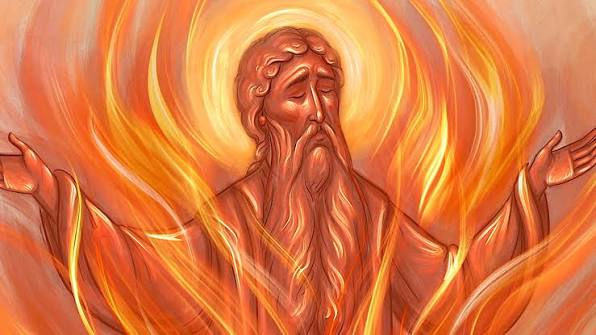


The closer I draw to God in the Jesus Prayer, the more my mind seems to erupt with distractions, fragmentation, chaos----almost like a spiritual attack. I suppose recognizing it is a first step in overcoming such opposition...just return to the Jesus Prayer. But, man, it is intense. ...Lord, my gratitude, stay with me.