_edited.jpg)
The Abyss That Smiles Back
On the Envy of the Wicked and the Narrow Mercy That Saves

“I was envious of the arrogant when I saw the prosperity of the wicked… then I understood their end.” (Psalm 73)
You have seen it.
Do not pretend you have not.
The ease of their life.
The smoothness of their path.
The absence of struggle that mocks your wounds.
They speak and are applauded.
They take and are not rebuked.
They build themselves upon sand and call it strength.
And something in you stirs.
Not openly.
Not with words.
But with a quiet turning of the heart.
Why not me?
Why this narrow path?
Why this constant dying?
The Psalmist does not hide it.
He confesses what most bury.
“I was envious.”
This is the abyss.
Not hatred.
Not rebellion.
Something more subtle.
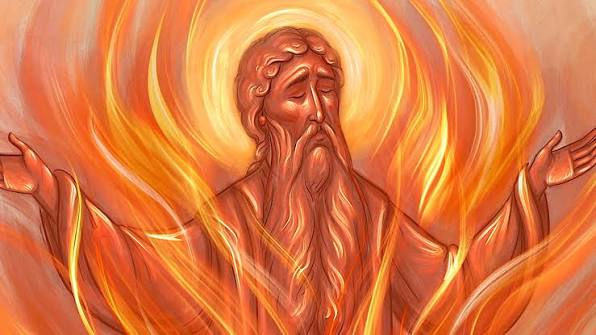
A desire to step out of the fire.
To live without the Cross.
To possess without repentance.
To be whole without being broken.
The desert fathers saw this clearly.
They did not fear open sin as much as this hidden comparison.
Abba Poemen said that a man can endure many labors, but if he measures himself against another, he has already fallen into the pit.
For envy is not about the other.
It is a judgment against God.
You look at the life of another and say in your heart
You have given wrongly.
This is why it burns so deeply.
It is not a passing thought.
It is a wound against trust.
The wicked seem at peace.
But their peace is a surface stretched over emptiness.
St. Isaac says that the heart that seeks comfort outside of God becomes blind to its own sickness.
And so the wicked laugh.
But they do not see.
You see.
And that is your torment.
You see the cost.
You feel the weight.
You know the narrowness of the path that leads to life.
And still you are tempted.
This is the great war.
Not whether you will sin in obvious ways.
But whether you will abandon the path inwardly
while continuing to walk it outwardly.
To remain externally faithful
while the heart begins to drift toward another kingdom.
The elders speak of this with fear.
St. Sophrony says that when a man loses the vision of eternity, he inevitably begins to measure himself according to the standards of this world.
And once this happens, even virtue becomes unbearable.
Prayer becomes dry.
Obedience becomes suffocating.
Silence becomes emptiness.
Why?
Because the heart has tasted another promise.
A false consolation.
A life without crucifixion.
But the Psalm does not end in envy.
It ends in fire.
“I entered the sanctuary of God… then I understood.”
This is the turning.
Not by argument.
Not by effort.
But by entering into the presence.
There, everything is stripped bare.
The prosperity of the wicked is revealed as a shadow.
Their strength as fragility.
Their laughter as forgetting.
“They are set in slippery places.”
This is the truth you are given to see.
Not to condemn them.
But to save you.
Because the greater danger is not their fall.
It is your desire to stand where they stand.
So the Psalmist cries out
“My flesh and my heart may fail
but God is the rock of my heart and my portion forever.”
This is the only answer.
Not explanation.
Not justification.
But a choosing.
To remain.
To stand in the poverty.
To accept the hiddenness.
To endure the seeming barrenness of a life given to God.
The modern elders speak with one voice.
Do not seek to be consoled as the world is consoled.
Do not measure your life by what can be seen.
Do not trust the peace that comes without repentance.
Because it is not peace.
It is forgetfulness.
And forgetfulness is death.
Better to stand trembling on the narrow path
with nothing but the Name of Jesus
than to dwell in the wide place where God is absent.
You have walked to the edge of that abyss.
You have felt its pull.
And you were drawn back.
Not by your strength.
But by hope.
Remember this.
Hope is not a feeling.
It is a hand that seizes you when you are already falling.
Do not resist it.
Do not look again into that abyss with longing.
Turn your eyes.
Enter the sanctuary.
And remain there.
Even if your heart is broken.
Even if your prayer is dry.
Even if everything within you cries out for another life.
Remain.
Because in the end there are only two paths.
One that glitters and collapses.
One that wounds and saves.
Choose the wound.


Comments