_edited.jpg)
In the Fire of the Holy Spirit
A meditation on living and praying in the Breath of God

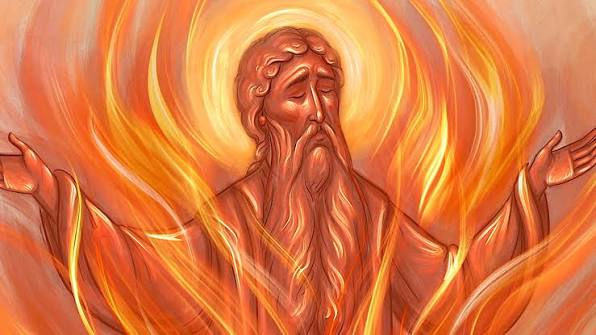
“If you will, you can become all flame.”
Abba Joseph of Panephysis
The Christian life is not sustained by effort alone. It is sustained by the indwelling of the Holy Spirit. Without Him the Gospel becomes a moral code, the Church a human institution, and prayer a hollow discipline. With Him even weakness becomes a place of divine action, and even silence becomes full of God.
From the beginning, Scripture presents the Spirit as the life of God poured into creation. The Spirit hovered over the waters at the dawn of the world. The breath of God animated Adam from the dust. The prophets spoke because the Spirit came upon them. Yet all of this was a preparation for Pentecost, when the Spirit was no longer given to a few but poured out upon all flesh. When Christ breathed on the disciples and said Receive the Holy Spirit, He was restoring humanity to its true atmosphere, life lived not merely before God but filled with God.
St Paul tells us that the Spirit cries out within us Abba Father. This means that prayer is not something we generate. It is something that happens within us. We do not reach up toward God by our own strength. The Spirit rises within us and draws us into the Son’s own relationship with the Father. Even when words fail, the Spirit intercedes with groanings too deep for speech. To pray for the Holy Spirit is therefore to pray for the very capacity to pray.
The desert fathers understood this with great clarity. They were not interested in techniques. They sought the fire. Abba Joseph once said that if you will, you can become all flame. He did not mean emotional intensity. He meant a heart so given over to the Spirit that everything else is consumed. They fasted, kept vigil, and guarded the mind not as ends in themselves but as a way of clearing space for the Spirit to dwell and act freely.
Abba Macarius taught that the heart is a small vessel but dragons and angels are in it. Only the Holy Spirit can cleanse it and make it a throne of God. Without the Spirit, the ascetic life becomes harsh and sterile. With the Spirit, even tears become sweet and repentance becomes light.
St Isaac the Syrian speaks of the Holy Spirit as the Comforter who visits the soul in hidden ways. He says that when the Spirit comes, the heart feels a tenderness toward all creation and even enemies become dear. This is the true sign of the Spirit’s presence. Not visions or ecstasies but love, gentleness, and a quiet joy that endures suffering.
The modern elders speak in the same way. St Silouan taught that the Holy Spirit gives the soul both knowledge of God and compassion for every person. St Porphyrios said that holiness is not achieved by force but by surrender to the Spirit. St Paisios taught that when we call upon the Holy Spirit sincerely, even a little, He rushes to help us because this prayer is always in harmony with the will of God.
Among the saints who lived this surrender with luminous simplicity stands St Philip Neri. Though not a monk of the desert, he carried the desert within his heart. As a young man praying alone in the catacombs of Rome, he begged God for the Holy Spirit. One night, a globe of fire entered his chest and filled him with a love so intense that it physically enlarged his heart. From that moment, he lived in a state of burning charity, overflowing with joy, compassion, and tireless love for souls.
Philip’s Pentecost did not make him a mystic withdrawn from the world. It made him a father in the midst of it. The Holy Spirit turned his heart into a dwelling place of God and a refuge for others. This is always the fruit of true devotion to the Spirit. It does not lead away from love of neighbor but into it.
To pray for the Holy Spirit is therefore the most radical prayer a Christian can make. It is to ask God to take possession of the heart. It is to ask that fear be replaced with trust, hardness with tenderness, self will with obedience, and isolation with communion.
Come Holy Spirit is not a poetic phrase. It is a cry for life.
When this prayer becomes steady and sincere, the Spirit begins to shape the soul quietly from within. He teaches the heart how to pray. He gives strength to endure. He reveals Christ not as an idea but as a living presence. He makes the Church not an institution but a Body filled with divine breath.
The saints did not become saints because they were strong. They became saints because they allowed themselves to be set on fire.
And that fire is still given.
All who ask will receive.


Comments