_edited.jpg)
From the Darkness of the Catacombs to the Light and Joy of the Kingdom
St. Philip Neri and the Discovery of Hidden Fire

“Withdraw into yourself as far as you can, and there build a little cell where Christ may dwell.”
— Saying in the spirit of the Desert Fathers
⸻
He arrived in Rome with more dust than coin, the little he owned knotted into a kerchief at his waist. The city smelled of oranges and sewage, of incense and heat. It was not Florence. Rome’s grandeur was worn thin. Domes rose like old crowns above streets that argued with their own stones. Philip walked without a plan because he had not come to make one. He had come to vanish into the will of God, if it could be found, and to live inside it as a man lives inside his own breath.
He took whatever work came, hauling bales in a merchant’s warehouse by the Tiber, sweeping the floor before dawn, scratching numbers into a ledger with a careful hand. The pay was enough for bread, a corner to sleep, and a stub of candle to read by at night. He had managed to beg and borrow two books that would not leave him. Cassian, with a sliver of palm marking his place, and Climacus, its leaves loose and shuffled. He read slowly, chewing the sentences as if they were seeds that demanded patience before they could sprout. The words pressed on him. Stillness. Exile of the heart. The prayer that is breathed until it breathes you.
A beggar with a voice long divorced from gentleness led him one evening past the city walls to a gap in the earth. “There,” the man said, and laughed at Philip’s accent, then shuffled away. A rusted gate leaned open like a broken tooth. The air beneath was grave cool, carrying the damp sweetness of stone. The tunnels widened and squeezed like the breathing of some old creature at rest. He walked until his candle admitted its limits, and the dark gathered close. He would return each night he could. Down there, shadows were honest, and only the prayer had edges.
He began to eat once a day, sometimes less, and then only as if postponing a better hunger. Sleep came when it could wrestle him down. The city and all its former climbers’ talk receded into rumor. Florence lost its outline. The faces of friends blurred like frescoes dampened by rain. The little narratives he used to hold himself together, what he had done, what he hoped, who might have been thinking of him, loosened and drifted into silence. Renunciation, he had imagined, would be a clean cut. Instead it was an unthreading. He did not so much let go as find himself let go of. There was pain in it, a tearing of old names from the inside.
He prayed the Name, the simplest craft he owned, until his tongue warmed and his chest felt hollowed like a bell. At first it seemed he was speaking toward the dark, knocking with the hope someone might answer. Then the prayer turned and began to work on him. It gathered itself into his breathing and settled below thought, below feeling, in a place that kept no maps. Underground, time altered. Hours condensed. Minutes widened. He found himself weeping without the dignity of a reason and sometimes, passing through a market after a night below, smiling for no cause that anyone could see. He became a man interrupted by joy and had no language for it.
He told God what he could. He had no clever speech left over from Florence. “I have nothing,” he said in the tunnels, and the bones were silent and the stones were kind. On good nights he could say it gratefully. On bad nights he could not speak at all, only row the oar of the Name through fog. He learned the commerce of hunger, how it might be an arrow and not a complaint. Loneliness took on a different weight. The proper poverty that makes room for a Guest.
Above ground, he began to know the poor by the silhouette of their blankets. He brought bread when there was bread and water when there was only that. A woman with one eye and a laugh like a cracked cup called him “Fratello.” A boy with ruined lungs followed him one morning for the small warmth of his voice. He discovered that the Name he had learned to breathe in the dark preferred company. It moved toward faces and rested there, as if grace had always intended to travel in both directions.
Cassian taught him vigilance without drama. Guard the thoughts. Hold the tongue. Keep the mind soft as wax toward God and hard as iron toward fantasy. Climacus demanded more. Renounce praise. Renounce even the subtle sweetness of having renounced praise. Become a foreigner everywhere, including in your own house. Sentences finished him before he could finish them. He would close the book and lie on the floor until the spinning stopped, then return to the prayer, which asked only everything.
There were months when consolation left him. The tunnels were only tunnels. The words lay on the tongue like pebbles. His knees ached until sleep refused to speak with him. Shame came as a counselor. You are playing at holiness. Your poverty is theater. You are a boy in borrowed rags. He did not argue. He learned not to. He let the voices spend themselves while he kept to his rhythm. Breath. Name. Breath. Name. The quiet insistence of a man who rows because staring at the shore does nothing to bring it nearer.
When joy returned, it had forgotten trumpets. It entered like warm air after rain. It did not perform. It settled. He suspected it. Sweetness is a mask more often than a face. So he tested it. He carried it into the hospital wards where the air smelled of vinegar and fever and watched if it turned brittle. It did not. He led it back underground and watched if it evaporated into memory. It did not. Joy, he discovered, was not a thing he had found. It was a Someone who had found him where he could not pretend.
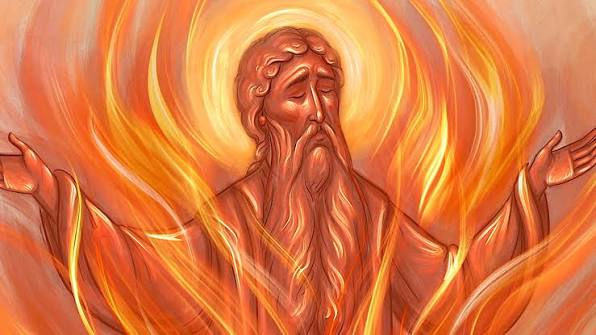
One night the prayer did more than burn. Above ground was Pentecost, they would say, but below, the air held its breath. He had been kneeling longer than he knew. The Name went out and returned like a tide. Then something within unclasped, like a door quietly unlocked from the other side. Heat surged. No fever. No effort. Pure gift. A hand pressed inside his chest and not withdrawn. He thought for a breath he might die and wanted to, for there is a kind of dying that is only birth in a stricter language. Pain braided with sweetness and neither predominated. He could not contain it and then discovered he did not need to. It contained him.
When it passed, the tunnels were the same. The wall still wept its small thread of water. The candle flamed without ambition. But the stone seemed to have learned a hymn. The prayer breathed him. He laughed, then hid his face, embarrassed before the bones of those who had loved unto blood. “Forgive me,” he whispered to the nameless saints. “I am a child.” He stood, and standing felt like being lifted.
He did not leave the catacombs behind, as if grace were a diploma. He returned because joy that does not return to the place of its finding grows arrogant and thin. He let the heat settle into a steadier flame. He pressed his cheek to the stone and thanked God for dark tunnels and for nights when the only merit was not leaving. He thanked God for the forgetting, of Florence, of faces, of the little stories, and for the voices that accused. They had kept him poor.
Rome noticed him without trying to. The poor trusted him because they could smell that he had no designs. He was not a collector of souls to polish and display. He had slipped out of that market. He gathered, almost by accident, a few young men exhausted by their own opinions. He took them to the sick and taught them how to place a hand on a fevered brow without fear, how to listen until the sick remembered that they were more than their illness. He gave them the Name without ornament, as a place to live rather than a phrase to repeat.
His humor grew with his poverty. Joy made him a little ridiculous, the way children are. He sang when others were silent, knelt in the street, forgot to eat. The solemn were made uneasy. The desperate were at ease. He deflected honor with jokes and turned compliments into errands. When someone called him the Apostle of Rome, he sent them to wash dishes in the hospital kitchen and forgot the title before they had found a broom.
He did not pretend to understand himself. When a friend, half mocking and half hungry, asked why he was always happy, he tried to answer and failed. “It is not that I am happy,” he wanted to say. “It is that I have been found.” He pointed toward a church door instead. “Come and see,” he said, not because the building concealed a secret but because the Lamb within taught the same lesson as the earth without. God loves to hide. He hides in bread and wine. He hides in the least of His brothers. He hid, once, in a boy from Florence who went missing and learned what it means to be remembered.
There were evenings when he would climb the Aventine just to watch the light let go of the city. The sellers’ cries thinned. The fountains spoke to themselves. Somewhere a window latched. Somewhere a mother hushed a child. Rome settled into the blank between breaths. He thought of the deep engine of prayer moving under it all. The nuns keeping vigil behind cloister walls. The layman in his shop muttering the psalms by habit. The old woman with a rosary counting the minutes of her loneliness. The catacombs remembering how martyrs sing. He knew then what he had suspected. The desert was not a place one traveled to but a room God carved in the chest. Anyone could enter who would be poor enough.
The years slid by without announcing themselves. He did not keep a diary. He kept a rule. Love without measure. Pray without ceasing. Stay small. When his name began to circulate, he stepped aside. When it stuck, he laughed at it and stepped aside again. He recognized the trap in mirrors and learned to pass them without looking. His hands grew used to blessing and to washing, and he never figured out which was the higher work.
If people came hoping for a method, he sent them back, gently, to their own darkness. Not to catacombs. Those are given to the dead and to God. But to a corner of silence each day where the old stories could exhaust themselves and the Name could begin its patient work. “It will feel like dying,” he warned them without severity. “You will lose the sentences you use to know yourself. People you love will forget to say your name. Let it happen. This is the beginning of being known.”
On a night late in his life, Rome breathes as it always has. He wakes without reason except that joy has nudged him. He sits, pulls on his cloak, and listens. The city’s heart keeps time with his own. He thinks of the tunnels, of the first cool breath under the earth, of the hour when the locked door inside him yielded, of the way the prayer learned to walk him rather than the other way around. He lies down again like a man returning a borrowed coat. Before sleep takes him, the Name rises once more, bare, bright, sufficient. He no longer asks to be useful. He asks to remain. And Rome, untroubled and unknowing, turns in its sleep while, below its ribs, the catacombs keep their steady cold and the candles keep the quiet law of fire.
⸻
Epilogue: Fire at the Altar
The catacombs taught Philip that joy is not found in the world’s applause but in God’s hidden descent. Yet the secret he discovered underground was never meant to remain buried. It rose with him into the Mass, where the same Presence that burned in silence beneath Rome burned upon the altar above it.
When the priest raised the Host and the chalice high, Philip recognized the hidden Guest of his nights below the earth. The One who had seized his heart in silence now gave Himself as food and drink. What had been known in secret became visible. Christ, present in His Body and Blood, offered not only to be adored but to be consumed.
For Philip, the Mass was no ritual to be endured but a furnace in which he was daily remade. To kneel before the altar was to step again into the catacombs, to be seized again by the fire that purifies and transfigures. It was here, at the heart of the Church, that the joy discovered in darkness found its source and its renewal.
The city saw only a joyful priest with laughter on his lips and love in his hands. But Philip knew better. The joy was not his. It was the flame of Christ’s own Presence, carried from the altar into the streets, from the chalice into the lives of the poor. The catacombs had hidden the seed. The Mass revealed the harvest.


Comments