_edited.jpg)
When the Word Breaks the Heart
The Earthquake That Leaves Nothing Standing

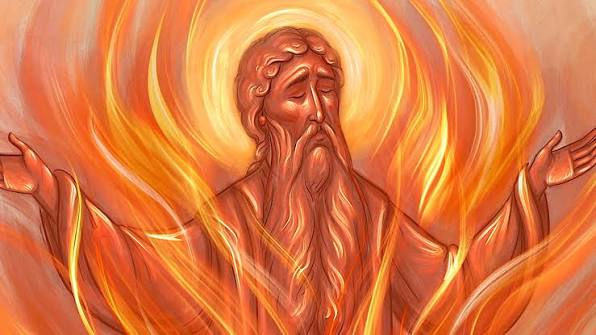
“Is not My word like fire, says the Lord, and like a hammer that breaks the rock in pieces.”
Jeremiah 23:29
Most men read the Word of God without ever being touched by it.
They read it as information. They read it as reassurance. They read it as confirmation of what they already believe about themselves. The Word passes over the surface of the mind and leaves the heart undisturbed. They close the book unchanged. They remain intact.
This is not because the Word lacks power.
It is because they lack exposure.
The Word of God is not given to decorate the mind. It is given to dismantle the man.
When the Word truly enters the heart, it does not console first. It exposes. It reveals. It lays bare what has been hidden even from oneself. It opens chambers you did not know existed. It illuminates movements within you that you would rather never see.
The monk who begins to love the Word discovers something terrifying. He cannot control what it will show him.
He opens the Scripture hoping for guidance. Instead, he finds accusation.
He reads, “Love your enemies,” and suddenly sees that his heart is full of quiet violence.
He reads, “Blessed are the pure in heart,” and discovers that his heart is crowded with images, fantasies, resentments, and secret negotiations with sin.
He reads, “Learn of Me, for I am meek and lowly in heart,” and realizes that everything in him resists descent.
The Word does not argue with him. It simply shines.
And in that light, he sees the truth.
This is the earthquake Archimandrite Zacharias speaks of. Not emotional disturbance. Ontological exposure. The ground beneath the false self begins to split. The structures that allowed him to live without seeing himself begin to collapse.
He realizes that he has lived his entire life at a distance from reality.
Not because he wanted to deceive God.
But because he wanted to preserve himself.
The Word does not allow this preservation to continue.
It enters like fire and begins its slow work.
It burns away self justification. It burns away illusion. It burns away the subtle belief that he is already alive.
At first, he resists.
He reads less. He distracts himself. He returns to activity. Because he senses what the Word is doing. It is not improving him. It is undoing him.
But if he remains. If he continues to expose himself to it. Something begins to change.
The Word stops being external.
It becomes internal.
It begins to live in him.
A single phrase will begin to follow him throughout the day. Not as an idea, but as a presence.
“Christ Jesus came into the world to save sinners, of whom I am chief.”
At first, he repeats it.
Later, it repeats him.
He finds himself whispering it without intending to. The words descend from the mind into the chest. They begin to carry grief. Tears come without effort. Not emotional tears, but ontological tears. The tears of a man who has finally seen the truth about himself and has not been destroyed by it.
He begins to understand that the Word is not speaking to his strengths. It is speaking to his poverty.
And this poverty becomes the meeting place.
The monk discovers that the Word of God does not come to reward the strong. It comes to resurrect the dead.
This is why obedience becomes essential.
Because the man who trusts himself will always soften the Word. He will interpret it in a way that allows him to survive. He will remove its teeth. He will turn it into something safe.
But the man who submits to the Word given through the Elder cannot escape it.
The Word confronts him from outside his control. It enters him without his permission. It dismantles the interior kingdom he has spent his life constructing.
This dismantling feels like loss.
He loses certainty. He loses self confidence. He loses the sense that he knows who he is.
But in this loss, something else begins to emerge.
Silence.
Not the silence of emptiness. The silence of truth.
The noise within him begins to die. The constant self commentary. The constant effort to secure himself. The Word has burned through these layers.
And beneath them, he discovers something he did not create.
Hunger.
A hunger for God that no longer depends on emotion or understanding.
He no longer reads the Word to learn.
He reads the Word to survive.
Because without it, he begins to forget what is real.
The Word becomes breath. The Word becomes fire. The Word becomes the force that holds his being together.
He begins to understand why the apostles said that the Word is living.
Because it acts.
It searches. It wounds. It heals. It rebuilds.
And most terribly of all, it refuses to leave him as he is.
This is why most men never allow the Word to enter deeply.
Because to receive the Word fully is to consent to your own end.
The end of the self that was built to survive without God.
But the monk who remains. The monk who continues to expose himself to the fire. The monk who allows the Word to break him again and again. He begins to experience something that cannot be explained.
The Word that destroyed him becomes the Word that carries him.
He no longer holds it.
It holds him.
And in this, he becomes what Archimandrite Zacharias calls an image of Pentecost.
A man no longer animated by his own thoughts.
But by fire.
Reflection based upon the writing of Archimandrite Zacharias Zacharou
The Wondrous and Paradoxical Ethos of Monasticism pp 116-123.


Comments