_edited.jpg)
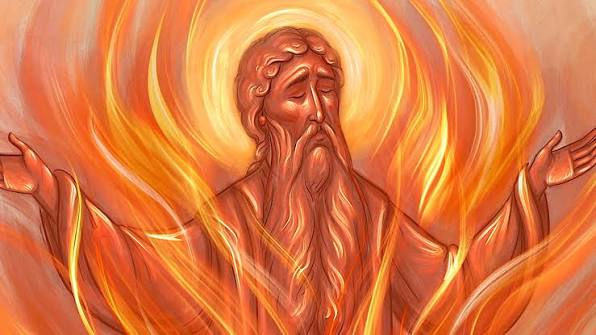
The Monk as the Heart of the World
How hidden lives sustain heaven and earth

“The monk becomes a living testimony to the power of Christ’s humility and a co-worker with the Lord in the salvation of the world.”
Archimandrite Zacharias Zacharou
⸻
Monasticism is often imagined as an escape from the world. In truth it is one of the most radical ways the world is loved. The monk does not withdraw because creation is beneath him but because he has been seized by a love that is too large to be contained by ordinary forms of life. He steps away from the many in order to stand for all. What seems like separation is in fact an enlargement of the heart.
Zacharou shows us that the true vocation of the monk is not to be impressive or exemplary but to become a living vessel of Christ’s own prayer for the world. The monk is not called to be a spiritual athlete but a bearer of divine universality. Through obedience, humility and self emptying, he becomes a place where the prayer of Gethsemane continues in time. His cell becomes an altar where the suffering and hope of all humanity are silently offered to the Father.
This is why the saints are called universal fathers. Many of them never left their monasteries or even knew the names of distant lands yet in Christ they carried the whole earth in their hearts. They embraced heaven as the uncreated life of God and earth as every person held in the love of the Crucified. Their prayer became a bridge between worlds. Their tears became a river in which nations were washed.
In such a life the person is fulfilled. Not because he has achieved something but because he has been emptied enough to receive all. The monk becomes a friend of Christ and like every true friend he begins to care about what Christ cares about. The salvation of all. His prayer is no longer for himself but for every face he has never seen and every soul that does not yet know God as He is revealed in the Son.
This prayer is not sentimental. It is cruciform. It is the prayer of the Lord in the Garden when He bore the weight of the world in His flesh. That same high priestly prayer did not end with the Resurrection. It continues in those who have renounced all in order to belong wholly to God. When a monk prays for the world he is not adding something to Christ’s saving work. He is being drawn into it. He becomes a co worker with the Lord not by power but by love.
This is the paradox of monasticism. The monk owns nothing yet he carries everything. He is free from all yet bound to all. He is hidden yet he stands at the center of the world. In his poverty Christ is rich. In his silence the Word speaks. In his tears the earth is held before God.
Saint Sophrony’s image of the monastery upheld by the prayer of even one monk reveals a mystery that cannot be measured. Christ alone saves. One drop of His blood redeems all. Yet He delights to find even one heart willing to share His burden. Not because He needs it but because love longs to be shared. To suffer with Christ for the salvation of the world is not a tragedy. It is glory.
And this glory is not reserved for monks alone. Every baptized person is called to enter this mystery in the measure God wills. In the home, in the city, in the hospital room, in the quiet corner of a parish church, each heart can be enlarged by the Spirit to carry others before God. The monk shows us what this looks like when nothing is held back. He becomes a living icon of what the Church herself is meant to be. A place where Christ’s prayer for the world never ceases.
This is why monasticism is not a relic of the past. It is the future of the Church made visible. It is a prophecy written in flesh. As long as there are hearts willing to be broken open by divine love the world will be sustained. Hidden lives will continue to hold heaven and earth together.


Comments