_edited.jpg)
The Fierce Narrow Way of Stillness

Reflection on The Ascetical Homilies of St. Isaac the Syrian Homily 21 paragraphs 19-26
There is something terrifyingly honest in St. Isaac’s distinction between outward virtue and the inner work of stillness. It exposes a truth that is easy to admire but hard to endure. He is not speaking of ideals. He is describing a reality that cuts through every false form of discipleship. He is telling me that I cannot live a double life: seeking the consolations of stillness while clinging to the busyness, affirmation, and noise of a distracted world. If I try to keep both, I lose both.
The monk who has nothing, who clings to nothing, who is free of every concern and ambition, has a task higher than almsgiving because he has been stripped of everything except God. He has nothing to give except the one thing the world cannot provide, a heart wholly given over to communion. That is a truth I do not want to hear. I want to believe I can mix disciplines, that I can carry concerns and still expect clarity, that I can maintain attachments and still ask for purity of heart. But St. Isaac names this as self-deception. “He who has many cares is the slave of many.” And it is clear that most of my struggles come from refusing to accept that slavery for what it is.
He says the stillness-worker is like a bird: needing little, expecting nothing, touching the earth lightly. I read those words and see how heavy I am. My mind is thick with concerns, my soul pinned to the ground by anxieties and unfinished stories. St. Isaac says such a person should not imagine he is walking toward the Kingdom with any confidence. It is brutal, but I know he is right. If I cannot be faithful in hidden things, what hope do I have of receiving what belongs to the hidden life of God?
He honors outward virtue, but he says with a kind of sorrow that men who please God through external acts are many, yet men who truly enter stillness are few and “exceedingly few.” The path of the monk, the path even of the layperson who desires an undivided heart, is not wide or balanced. It is not some vague mixture of prayer and good works. It is freedom from the world, toil in prayer, and unceasing remembrance of God. And this is the part that pierces: even someone who abandons all, who devotes himself entirely to the work of stillness, will still not do it perfectly. How much more scattered am I when my heart refuses to abandon even the smallest thread of concern?
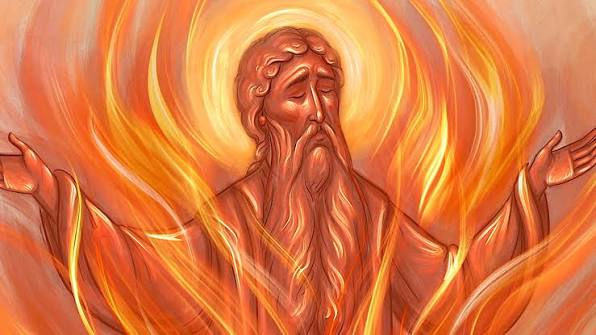
He tells me plainly that those who stand before the King, who are initiated into the mysteries through unbroken prayer, possess a boldness and a glory that cannot be compared with those who serve God through external actions. And this is not romantic language. He is describing an order of existence, a hierarchy of nearness. Those who remain before God, in silence and unceasing prayer, move creation. Their words are not resisted. Their minds become light. Their hearts become fire. And I feel the contrast like a wound. I spend so much of my life trying to solve things, fix things, carry things, while God is quietly calling me to simply stand before Him and be still.
St. Isaac names the saints who lived this way. He holds up St. John of Thebes, Abba Arsenius, the holy athletes who fled even good works so that nothing would pull them from the face of God. Their love for mankind was real, but it was purified, stripped of sentimentality, channeled entirely into prayer and tears and the invisible work of the heart. They fled everything for God’s sake, even compassion, when compassion would fracture their attention. “I for God’s sake am fleeing from you.” Those words burn. They sound harsh until I understand that the saint is not fleeing the person but the dispersion of the heart. He is choosing the “one thing necessary,” not because he despises others but because he knows that without God he has nothing of substance to give.


Comments