_edited.jpg)
The Fast That Binds Heaven and Earth
Why Great Lent Is Never a Private Act but the Offering of the Whole Body of Christ
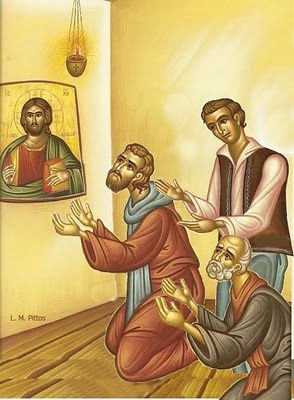
“We are not fighting alone.
The same prowess is being undertaken by all the other members of the Body.
Keeping the ordinances of the Church, we keep the bond with our fellows alive.”
— Archimandrite Zacharias Zacharou, “The Way of the Lord”
⸻
We have quietly ruined fasting.
We have turned it into a private spiritual wellness program, a dietary experiment, a form of self-curation. We speak of “my fast,” “what works for me,” “what I can manage,” as though Great Lent were a lifestyle brand rather than the trembling march of the Church toward the Resurrection.
Zacharou shatters this illusion.
The fast is not yours.
It never was.
The fast belongs to the Body.
The Church is not a building and not an organization. It is a living organism breathing with the breath of the Paraclete. Christ pours His resurrected life into His members through this Body, and no one is saved outside of it. Not the strong. Not the brilliant. Not the disciplined. Not the spiritually gifted. We live because the saints live. We endure because the prayers of the Mother of God cover us. We are held because the Body holds us.
This is why Zacharou dares to say something that offends modern religious individualism.
Your moments of grace do not come from you.
They come from the prayers of the saints.
They come from the obedience of the Body.
They come from a mystery far larger than your efforts.
And yet God waits for something from you.
Not heroics.
Not ascetical feats.
Not spiritual performance.
He waits for the widow’s mite.
Great Lent is that mite.
It is the smallest human act that binds us to the greatest divine movement. By choosing to fast in obedience to the Church, we are woven into the single great act of repentance being offered by the whole Body across the world. Monks. Mothers. Children. Old men. Prisoners. Hermits. Parishioners. Known and unknown. Weak and strong.
The same fire is being kindled in all of them.
And this is where modern Christianity breaks down.
We want a spirituality that costs us nothing and obliges no one else. We want to be saved as private persons. We want grace without obedience and communion without surrender. We want resurrection without the humiliation of being bound to others.
But the Body of Christ does not work that way.
When you fast, you are not disciplining your appetite.
You are keeping the bond of the Body alive.
When you refuse a meal, you are standing shoulder to shoulder with monks on Athos, widows in Russia, catechumens in Africa, and forgotten believers in prison cells. You are declaring with your body that you belong to a single crucified and rising organism.
And if you are weak?
If you are sick?
If you cannot keep the full fast?
Then you do something even more terrifying.
You place your weakness into the hands of the Church.
You accept a dispensation.
You refuse the pride of self-chosen asceticism.
You remain inside obedience rather than inventing your own righteousness.
This is not failure.
This is communion.
Because the power of the Church does not come from how hard we strive. It comes from how deeply we belong.
Zacharou is ruthless about this.
Fasting only has power when it is humble.
Not the humility that pretends to be nothing, but the humility that knows it receives everything. We do not fast to become holy. We fast because we are being carried by the prayers of the holy. We do not earn grace. We position ourselves to be given it.
And this is why fasting hurts.
It wounds the fantasy of autonomy.
It kills the illusion that you are self-made.
It strips you down until you can no longer pretend that your life is your own.
This is also why fasting awakens resurrection.
Because when the body is weakened, the heart becomes strong.
When the flesh is humbled, the mind becomes luminous.
When the ego is starved, the Spirit begins to speak.
You taste death in your body so that life may rise in your heart.
Not as a metaphor.
As a power.
And the fast does not stop at food.
Zacharou insists on the greater fast: the guarding of the mind.
You can starve your stomach and still gorge yourself on thoughts.
You can abstain from meat and still feast on fantasies, resentments, judgments, and secret scripts running in your head.
This is why vigilance is the heart of Lent.
The garden must be tended and guarded.
Repentance tills the soil.
Fasting weakens the weeds.
But watchfulness keeps the serpent out.
And when tears come, when shame is borne in confession, when mourning pierces the heart, something terrible and holy happens.
Grace descends.
Not as an idea.
Not as a mood.
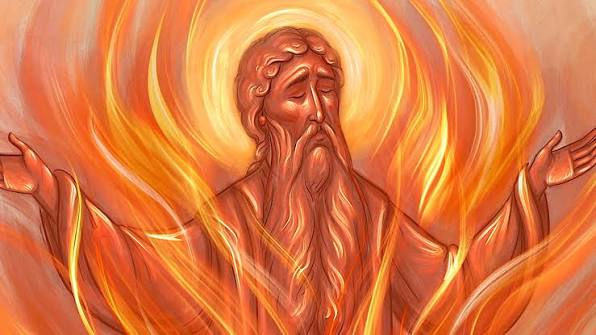
But as a fire that takes up residence in the heart.
The mind falls into the heart.
Prayer becomes alive.
The taste of death becomes the taste of resurrection.
This is what Great Lent is preparing.
Not better people.
Resurrected beings.
Not religious improvement.
The birth of a new creation inside the Body of Christ.
So fast.
Not as a project of self-control.
Fast as a member of the Body.
Fast because the saints are fasting.
Fast because the Mother of God is interceding.
Fast because the Church is moving like a single vast heart toward Pascha.
Offer your widow’s mite.
And let God do the miracle.
⸻
Reflection based upon the writings of
Archimandrite Zacharias Zacharou from
The Way of the Lord: Through the Triodion and Pentecostarion


Comments