_edited.jpg)
The Christianity That Refuses the Cross
Why a Faith That Costs Nothing Heals Nothing

“If anyone would come after Me, let him deny himself, take up his cross daily, and follow Me.”
— Luke 9:23
There is a way of being religious that never repents.
It practices devotion while guarding the self.
It speaks of humility while remaining intact.
It kneels often and dies never.
This is the Christianity Pope Shenouda refused to bless.
He knew how easily faith becomes a method of survival rather than a consent to death. When he said, Do not ask God to remove hardship, ask Him to give you endurance, he was not offering encouragement. He was removing an excuse. Hardship unmasks what prayer conceals.
The Gospel does not negotiate with the ego.
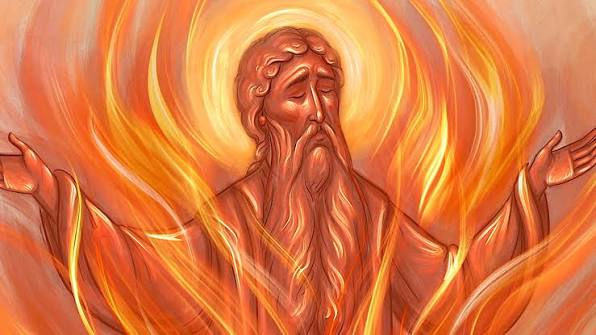
It condemns it to the Cross.
Christ does not say, Improve yourself.
He does not say, Understand yourself.
He says, Deny yourself.
And denial is not refinement. It is execution.
This is where most religious life quietly disobeys.
We want the Cross to mean insight.
Christ means death.
The Desert Fathers were ruthless because they were honest. Abba Moses said that unless a man becomes dead to his neighbor, he cannot be saved. Not kinder. Not calmer. Dead. Abba Agathon said that prayer is the hardest labor because it strips the soul of illusion. Prayer is where the lie finally has nowhere to hide.
In the desert there is no religious persona to maintain.
No audience to impress.
No explanation that protects you from the truth.
You either stand before God as you are, or you flee.
Modern elders speak no differently. St. Paisios said that many love Christ but reject the cross He personally assigns them. Elder Aimilianos taught that inner pressure is not cruelty but mercy, because it exposes the last stronghold of self-rule. Archimandrite Zacharias reminds us that real prayer terrifies the soul because God dismantles the self we have baptized in His name.
Pope Shenouda insisted that repentance is not an emotion.
It is a verdict.
It is God telling the truth about us.
And our consent to live under that truth without defense.
A Christianity that avoids this produces fragile believers.
Easily offended.
Easily scandalized.
Always exhausted.
Not because the Gospel is too heavy.
But because they are still carrying themselves.
Even love becomes false when the Cross is refused. God’s love does not preserve the false self. It burns it away. Whom the Lord loves He chastens. Discipline feels violent only to those who want mercy without obedience and closeness without surrender.
Dryness in prayer is where the lie is exposed. When prayer no longer rewards us, when God does not console or explain Himself, the question becomes unavoidable. Were we seeking God. Or relief. Communion. Or control.
Endurance here is not heroism.
It is honesty.
Christ did not enter suffering to make us feel understood.
He entered it to make us new.
He does not carry the Cross so that we may put ours down.
He carries His so that we may finally pick ours up.
Pope Shenouda lived what he preached. Exile without resentment. Authority without self-assertion. Silence without self-pity. He had already died, and so nothing could threaten him.
And the question remains, sharp and unyielding.
Not whether we believe in Christ.
But whether we are still using Him to avoid death.
The Cross is not an idea.
It is not a symbol.
It is the place where our religious self stops surviving.
Anything less is not the Gospel.
It is not the desert.
And it cannot heal the heart.

Comments