_edited.jpg)
Fear and Joy Before the Holy Place
The Heart Prepared for the Fire of the Mystery

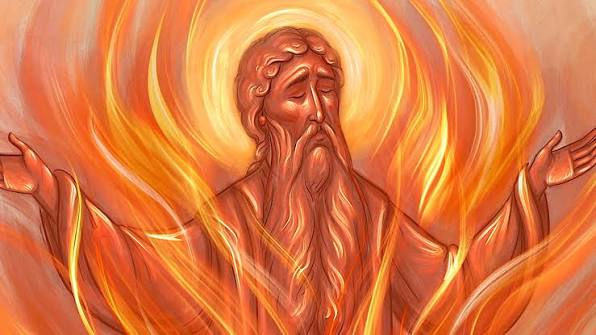
Fear and trembling and joy are not opposites in the presence of Christ. They are born together. Where the living God draws near, the heart cannot remain neutral. It awakens. It knows itself seen. It knows itself loved. This is the paradox the Eastern Church never tries to resolve, only to enter more deeply. To stand in the temple is to stand at the edge of fire, warmed and undone at the same time.
Fear in this sense is not anxiety or servile dread. It is the knowledge of Who stands before us and who we are in His light. The Fathers speak of this fear as the beginning of wisdom because it strips the soul of illusion. It is the trembling of Isaiah before the thrice holy God. It is Peter falling at the knees of Christ saying depart from me for I am a sinful man. It is the soul suddenly aware that God is not an idea but a consuming reality. This fear does not push us away. It places us rightly. It teaches the heart to bow.
Yet this fear is never alone. Where Christ is truly present, joy rises just as surely. Not the joy of excitement or emotional comfort, but the deep joy of being received despite our unworthiness. The joy of the prodigal who smells the feast before he has finished his confession. The joy of the thief who hears remember me spoken from the Cross. The Eastern phronema holds these together because the Gospel itself holds them together. God is holy beyond all comprehension and yet nearer to us than our own breath.
Orthros is the Church’s gentle mercy to the soul. Before the full weight of the Mystery is placed upon us, she warms the heart. In the darkness and early light, the psalms begin to loosen what has grown rigid. The hymns gather what has been scattered by the noise of the world. The saints step forward not as distant figures but as living witnesses who have already learned how to stand in this fire. Orthros teaches us again how to be present. It gives the heart time to remember God before it dares to receive Him.
This preparation is not optional. It is not mere liturgical ornament. The Fathers are clear that one does not rush toward the Holy. To do so is not boldness but blindness. The heart must be softened. Attention must be restored. Repentance must be allowed to breathe. Without this preparation, the Mystery remains outside us even if we stand before it. With it, even a single word of the liturgy can pierce the heart and open it to grace.
The Divine Liturgy then gathers all of this and carries it beyond words. What was warmed at Orthros is now placed before the altar. Fear deepens because the offering is real. Joy deepens because the gift is beyond imagining. The same Christ whom the angels serve in trembling gives Himself into our hands. The same fire that sanctifies the altar enters the poverty of our bodies and souls. Here fear becomes reverence and joy becomes communion.
To prepare oneself fully is not to make oneself worthy. It is to become honest. To come awake. To let the heart be shaped by silence, psalmody, and repentance so that when Christ draws near, we are not startled by His nearness. Preparation teaches us how to receive without grasping and how to rejoice without forgetting Who stands before us.
This is why the Church gives us time. This is why she leads us slowly. Fear and trembling and joy are not emotions to be manufactured. They are gifts that arise when the heart stands rightly before God. Orthros teaches us how to stand. The Divine Liturgy teaches us how to be given to. And between the two, the soul learns again the holy art of approaching the living Christ with awe and with love.


Comments